
In the heart of Jharkhand, nestled between the Subarnarekha and Kharkai rivers, lies a city that changed the face of industrial India — Jamshedpur. It is more than just steel plants and smoke stacks; it’s a city with a name that carries a legacy. Many have heard of its growth, some know its founder, but few truly understand how Jamshedpur got its name — a tale that blends vision, nation-building, and tribute.
The Man Behind the Dream: Jamsetji Tata
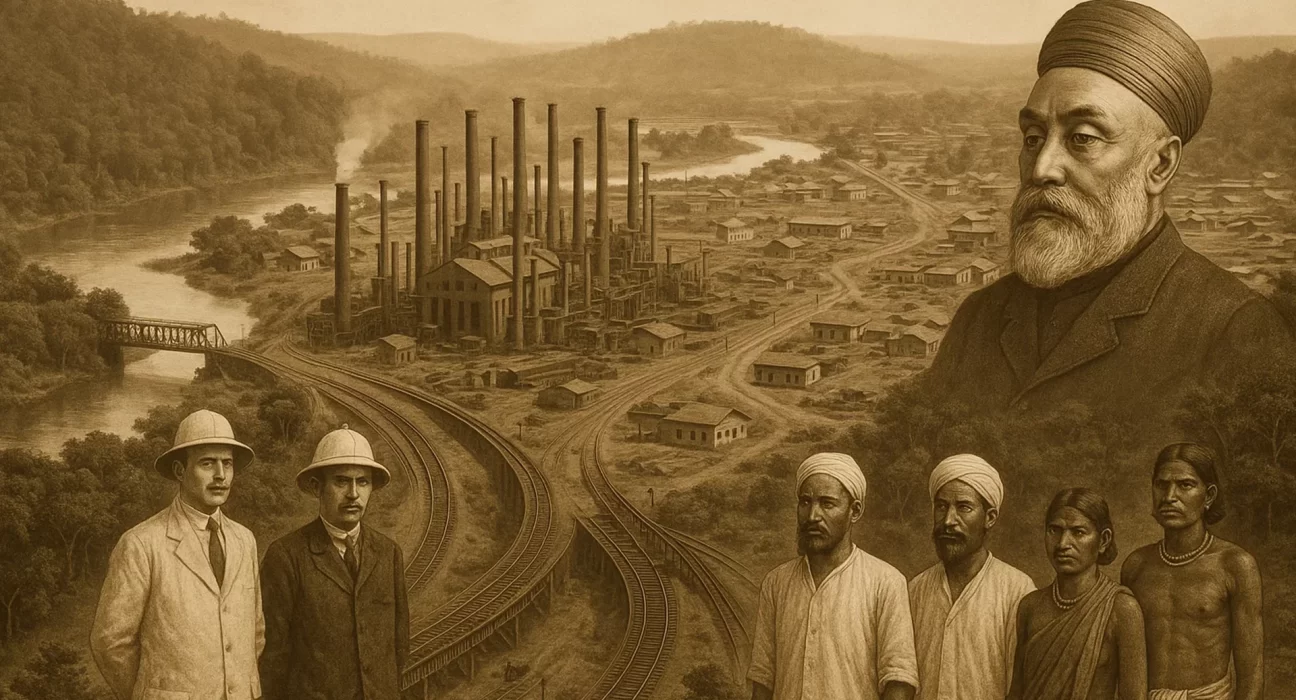
To understand how Jamshedpur got its name, we must travel back to the late 1800s. Jamsetji Nusserwanji Tata, the father of Indian industry, envisioned an India that stood strong on the foundation of self-reliance and progress. He believed the nation needed its own steel plant to reduce dependence on British imports and empower local industry.
His dream was not just to build a steel plant, but to build a modern city around it — a place where workers and families could live with dignity, hygiene, education, and access to health care. It was a revolutionary thought in colonial India.
Finding the Land: The Search for a Steel City
In the early 1900s, Jamsetji’s vision was carried forward by his sons and close associates. With the help of geologist Charles Page Perin, the Tata group began searching for iron-rich land. After scouting various locations, they found the perfect spot in eastern India — a land filled with mineral resources, flowing rivers, railway connectivity, and tribal harmony.
This area, known as Sakchi, was chosen as the site for India’s first integrated steel plant. Construction began, and by 1911, the Tata Iron and Steel Company (TISCO) was operational.
Sakchi Becomes Jamshedpur
As the steel city took shape, Sakchi evolved into a bustling township. Roads, hospitals, schools, parks, and planned neighborhoods emerged, all guided by Tata’s philosophy of inclusive development. By the 1910s, the British Government could no longer ignore the contribution of this industrial marvel.
In 1919, in honor of Jamsetji Tata’s legacy, Lord Chelmsford, then Viceroy of India, officially renamed Sakchi as Jamshedpur — literally meaning “the town of Jamshed (Jamsetji)”. It was a rare moment when a city in British India was named after an Indian entrepreneur.
The Legacy Behind the Name
So when we ask how Jamshedpur got its name, we uncover not just an administrative decision, but a symbolic tribute. It’s a story of how a single man’s vision, paired with relentless determination and progressive thinking, gave birth to an entire city.
Unlike cities that grew around trade or ancient heritage, Jamshedpur was India’s first planned industrial city, with every street, school, and garden bearing the mark of purpose.
Even today, Tata Steel continues to be the heartbeat of Jamshedpur. The city remains an example of corporate responsibility, where the private sector contributes to public welfare — a legacy that Jamsetji had envisioned more than a century ago.
Cultural and Civic Identity
Jamshedpur today is not just a steel city. It has grown into a multicultural hub with residents from across India and abroad. It has some of the best educational institutions like XLRI, premier hospitals like Tata Main Hospital, and a quality of life rarely seen in industrial cities.
The name Jamshedpur stands for pride, progress, and purpose. Streets like Bistupur, Kadma, and Sonari are now urban centers, yet they still echo the planning and care from those early days.
Why the Name Still Matters
In a rapidly changing India, many towns and cities are struggling with infrastructure, pollution, and urban chaos. But Jamshedpur continues to be an example of balanced growth — clean roads, green spaces, education, and employment working in harmony.
The name “Jamshedpur” is more than a title; it’s a tribute to India’s industrial roots and a reminder that cities can be built not just with brick and mortar, but with vision and values.
So next time you hear the name, remember — how Jamshedpur got its name is a story of India’s modern awakening, sparked by one man’s extraordinary dream.