
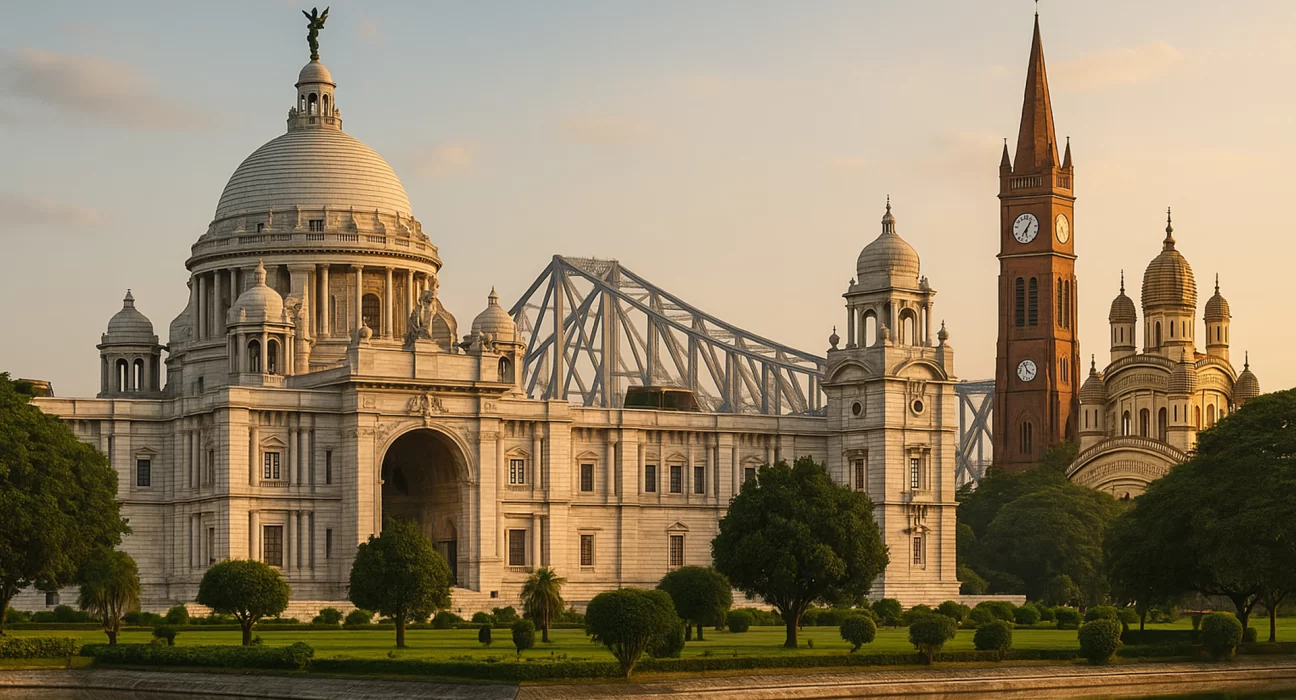
Kolkata, often referred to as the “Cultural Capital of India”, is a city that effortlessly blends colonial-era charm with a vibrant modern soul. Located in the eastern part of India, it is the capital city of West Bengal and stands proudly on the banks of the Hooghly River. The city is known not just for its grand colonial architecture and literary legacy but also for its warmth, intellect, and enduring sense of identity. From the moment you step into Kolkata, you feel the heartbeat of a place that celebrates both tradition and transformation.
Originally known as Calcutta until 2001, Kolkata was the first capital of British India and played a crucial role in India’s independence movement. Its lanes have witnessed the steps of revolutionaries, poets, philosophers, and freedom fighters. Today, it continues to inspire with its intellectual vibrancy and progressive ideals.
People visit Kolkata for many reasons. Tourists come to explore historic sites like the Victoria Memorial, Howrah Bridge, and the Indian Museum, the oldest in the country. Art and literature enthusiasts are drawn to its galleries, book fairs, and film festivals. Entrepreneurs find opportunity in its growing IT and textile sectors, while students flock to its renowned institutions such as Presidency University and Jadavpur University. And for those seeking a home, the city offers a rare emotional comfort—its people, food, and sense of community make living here both accessible and deeply meaningful.
Kolkata is not just a city; it’s an emotion. It speaks in poetry, dances in the rhythm of Rabindra Sangeet, and tastes like the sweet burst of a rosogolla. Whether you come here to work, study, settle, or simply explore, Kolkata will welcome you with open arms—and leave an unforgettable impression on your soul.
Table of Contents
Top Questions
Why did Kolkata change its name?
Kolkata changed its name from Calcutta in 2001 to better reflect the original Bengali pronunciation and cultural identity of the city. The name “Calcutta” was an anglicized version used during British colonial rule. Renaming it to Kolkata honored the city’s Bengali heritage and aimed to restore its authentic local identity.
What is the difference between Kolkata and Calcutta?
Kolkata and Calcutta refer to the same city, but the difference lies in spelling and pronunciation. “Calcutta” was the name used during British colonial times, while “Kolkata” is the modern, official name that matches the Bengali language’s pronunciation. The change represents a shift towards embracing local culture and post-colonial identity.
Why is Kolkata called the black city?
Kolkata was once called the “Black City” because of the heavy pollution and soot from its industrial activity during the British era, especially from jute mills and factories. The dense smog and darkened buildings gave it a grimy appearance. Although the city has modernized since then, the nickname reflects its industrial past.
Which language is spoken in Kolkata?
The primary language spoken in Kolkata is Bengali, which is also the official state language of West Bengal. However, many residents also speak Hindi and English, making the city linguistically diverse and cosmopolitan.
Why are there so many Chinese in Kolkata?
Kolkata has a significant Chinese community because of immigration during the 18th and 19th centuries when Chinese traders and laborers settled in the city. The area known as Tangra became famous as Kolkata’s Chinatown, where many Chinese immigrants established businesses, especially in tanneries and restaurants. This community has contributed richly to the city’s cultural mosaic.
Quick Facts
| Country | India |
| State | West Bengal |
| Division | Presidency Division |
| District | Kolkata |
| Established | 1690 (officially recognized as a city by British East India Company) |
| Named After | The name “Kolkata” is derived from the Bengali word “Kalikshetra,” meaning the “land of the goddess Kali.” |
| Government Type | Municipal Corporation under a democratic framework |
| Government Body | Kolkata Municipal Corporation (KMC) |
| Administrator | Mayor of Kolkata (currently elected; as of 2025, held by Firhad Hakim) |
| Area | Approx. 205 km² (79 square miles) |
| Elevation | Around 9 meters (30 feet) above sea level |
| Population (2011) | Approx. 4.5 million (city proper); about 14.8 million in the metropolitan area |
| Males | Approximately 2.3 million (city proper) |
| Females | Approximately 2.2 million (city proper) |
| Sex Ratio | Around 900 females per 1000 males (city proper) |
| Literacy Rate | Approx. 87% (city proper) |
| GDP | Estimated around (₹5,00,000 crore ) USD $60 billion (metropolitan area, 2023 estimate) |
| Time Zone | Indian Standard Time (IST), UTC +5:30 |
| PIN Code | Multiple; ranges from 700001 to 700156 (depending on locality) |
| Telephone Code | +91-33 |
| Vehicle Registration | WB-01 to WB-20 (varies by registration zones within Kolkata) |
| Public Transport | Kolkata Metro, buses (government and private), trams, auto-rickshaws, taxis, and cycle-rickshaws |
| Official Language | Bengali |
| Spoken Language | Bengali, Hindi, English, and other regional languages |
| Official Website | www.kmcgov.in |



Best Things to Do in Kolkata
Top Attractions and Must-See Spots in Kolkata
Kolkata is not just a city you visit; it’s a city you experience with all your senses. Whether you’re a history buff, an art lover, a nature enthusiast, or someone simply craving a cultural deep dive, Kolkata offers a tapestry of unforgettable sights and activities. It’s a destination where every corner tells a story, and every street is a museum of memories.
Start your journey at the iconic Victoria Memorial, an exquisite white marble monument built in honor of Queen Victoria. Surrounded by lush gardens, it houses rare paintings, manuscripts, and colonial artifacts. Just across the Hooghly River stands the majestic Howrah Bridge, a steel marvel that connects Kolkata with Howrah and carries millions of commuters daily. Don’t forget to witness it at dusk when the city lights shimmer on the river.
Art and culture lovers should head to the Indian Museum, the largest and oldest museum in India, showcasing artifacts that date back thousands of years, including ancient fossils, sculptures, and Egyptian mummies. If you’re into literature, a walk through College Street—famous for its second-hand book market—feels like wandering through the pages of history. End your literary tour at the Coffee House, a nostalgic hangout spot for poets and thinkers, echoing the voices of legends like Satyajit Ray and Amartya Sen.
Kolkata is also home to the spiritual aura of the Kalighat Temple and Dakshineswar Kali Temple, both drawing thousands of pilgrims. For a peaceful retreat, stroll through the Eco Park, a beautifully landscaped green space with a replica of the Seven Wonders of the World and boating lakes.
Want a taste of the royal? Visit the Marble Palace, an opulent 19th-century mansion filled with statues, chandeliers, and paintings by European masters. Nearby, St. Paul’s Cathedral offers a gothic contrast to the colonial charm of the city, known for its grand stained glass windows and serene atmosphere.
For a unique experience, take a hand-pulled rickshaw ride through the lanes of North Kolkata or enjoy a sunset boat ride on the Ganges. Explore the vibrant Kumartuli district, where artisans sculpt clay idols for Durga Puja. Photography enthusiasts will find endless frames in Prinsep Ghat, especially during the golden hour.
Shopping lovers can explore New Market, a bustling colonial-era marketplace where you’ll find everything from spices to jewelry. Nearby, Park Street is your go-to for music, nightlife, and legendary eateries.
In Kolkata, every day can be a new story. Whether you’re visiting for a few hours or a few weeks, the city offers layers of history, flavor, and spirit to uncover.
Food & Dining
A Culinary Journey Through Kolkata’s Street Food and Iconic Eateries
If there’s one thing Kolkata takes as seriously as literature and art, it’s food. In fact, many say you haven’t truly experienced the city until you’ve tasted its rich, diverse, and soul-satisfying cuisine. From aromatic biryanis to street-side snacks and centuries-old sweet shops, Kolkata is a culinary treasure trove that caters to every appetite and emotion.
The heart of Kolkata’s food culture lies in its streets. Begin with the famous Kathi Rolls, invented right here in the city. Whether you choose chicken, mutton, or paneer, these flaky parathas filled with juicy kebabs and onions are an instant favorite. Equally iconic is Phuchka—Kolkata’s take on panipuri—served with tangy tamarind water and spicy mashed potatoes. You’ll find crowds lining up around street corners for that perfect burst of flavor.
Biryani in Kolkata deserves a category of its own. Influenced by Awadhi traditions, Kolkata Biryani is known for its subtle flavors, tender meat, and most notably—a whole potato tucked in like a secret gem. Places like Arsalan, Aminia, and Royal Indian Hotel have become pilgrimage spots for biryani lovers.
For sweet lovers, rosogolla and sandesh need no introduction. Born in Bengal, these melt-in-your-mouth milk-based desserts have become global symbols of Bengali pride. Shops like KC Das, Balaram Mullick & Radharaman Mullick, and Nabin Chandra Das are synonymous with sugary bliss. Don’t miss Mishti Doi, a traditional sweet yogurt served chilled—especially perfect during summer.
If you’re looking for sit-down dining, Kolkata offers a wealth of choices. Peter Cat is a legendary restaurant on Park Street known for its Chelo Kebabs and colonial-era ambiance. Next door, Flurys serves English-style breakfasts and pastries in a charming European-style café setting. For authentic Bengali thalis, visit Bhojohori Manna, 6 Ballygunge Place, or Oh! Calcutta—all offering comforting rice, fish curry, shukto, and chutneys in homely or heritage-style atmospheres.
Kolkata’s Chinese food culture also deserves applause. The city is home to India’s only Chinatown in Tangra, where generations of Hakka Chinese have created a fusion cuisine of Indian-Chinese fare—think chilli chicken, garlic noodles, and Manchow soup.
The city also hosts food festivals throughout the year. From the Kolkata Food Truck Festival to Ahare Bangla, a culinary carnival celebrating regional cuisine, food lovers find ample reasons to celebrate the diverse palette of the city.
Whether you’re dining at a five-star restaurant or a humble roadside stall, the flavor of Kolkata is deeply personal, generously spiced with nostalgia, and always served with love.
Events and Festivals
The Best Festivals and Events to Experience in Kolkata
When it comes to festivals, Kolkata doesn’t just celebrate—it erupts with color, sound, and joy. The city’s cultural calendar is packed year-round with events that are spiritual, artistic, musical, literary, and downright electric. If you want to feel the heart of Kolkata, time your visit with one of its many iconic festivals.
At the top of the list is Durga Puja, Kolkata’s grandest and most emotionally significant celebration. Held every year in September or October, this five-day event transforms the city into an open-air art gallery. Giant pandals (temporary artistic structures), intricate idols of Goddess Durga, themed installations, and dazzling lights adorn every neighborhood. The city stays awake all night as people hop pandals, enjoy cultural performances, devour street food, and soak in the spiritual and creative energy. It’s often said that Kolkata lives a whole year for these five days.
Another major festival is Kali Puja, held on the same night as Diwali. While the rest of India lights up for Lakshmi, Bengalis pay homage to the fierce and protective Goddess Kali. Temples like Kalighat and Dakshineswar see lakhs of devotees offering prayers amid flickering diyas and firecrackers.
The Kolkata International Film Festival (KIFF), held annually in November, is one of the most prestigious film festivals in Asia. Celebrating global cinema with a focus on regional storytelling, it draws film enthusiasts, directors, and stars from around the world. Movie screenings, red carpets, panel discussions, and retrospectives make KIFF a must for cinephiles.
Kolkata also hosts the International Kolkata Book Fair, the largest non-trade book fair in the world, attracting millions of readers, publishers, and writers every year. Held in late January or early February, it is not just a book market—it’s a celebration of literature, ideas, and free speech.
For music lovers, there’s Dover Lane Music Conference, an annual Indian classical music festival that spans nights of soulful performances by maestros. Meanwhile, Baul Fakiri Utsav celebrates folk traditions and the mystic music of Bengal’s wandering minstrels.
Other events like Christmas in Park Street, the Kolkata Street Food Festival, Poila Baisakh (Bengali New Year), Eid celebrations in Zakaria Street, and Rabindra Jayanti (the birthday of Rabindranath Tagore) showcase the city’s rich multicultural ethos.
In Kolkata, festivals aren’t just events—they’re emotional experiences that unite generations, communities, and hearts. Whether you’re spiritual, artistic, or just curious, Kolkata’s festival calendar offers a deeper connection to the soul of the city.
Outdoor Activities and Nature
Exploring the Great Outdoors: Parks, Riverbanks, and Green Escapes in Kolkata
While Kolkata is often celebrated for its cultural richness and historical landmarks, its outdoor spaces and natural retreats are equally refreshing. In a city bustling with life, these green pockets and scenic locations offer much-needed breathing space for residents and visitors alike. Whether you’re in the mood for a peaceful walk, birdwatching, boat rides, or weekend picnics, Kolkata has something serene for everyone.
One of the most beloved outdoor destinations in the city is the sprawling Eco Park (Prakriti Tirtha). Located in New Town and spread across 480 acres, it’s the largest urban park in India. It features a huge waterbody, island cottages, themed gardens like the Japanese Garden and Butterfly Garden, cycling paths, toy train rides, and replicas of the Seven Wonders of the World. It’s perfect for families, nature lovers, and fitness enthusiasts.
For riverfront serenity, head to Prinsep Ghat. Built during the British era and recently renovated, this elegant spot on the Hooghly River is ideal for evening strolls, cycling, or romantic boat rides against the backdrop of the Vidyasagar Setu bridge. At sunset, the view is magical, with street food vendors and heritage charm adding to the ambiance.
Another gem is the Botanical Gardens in Shibpur, officially known as the Acharya Jagadish Chandra Bose Indian Botanic Garden. Home to the world-famous Great Banyan Tree (over 250 years old), this 270-acre garden is a sanctuary of rare plants, orchids, and serene ponds—a haven for birdwatchers and photographers.
Kolkata’s Rabindra Sarobar, often referred to as the “lungs of South Kolkata,” is a man-made lake surrounded by lush gardens and jogging tracks. It’s a favorite morning spot for walkers and yoga groups and a peaceful retreat for weekend relaxation.
For more adventurous spirits, Tollygunge Golf Club offers one of the oldest golf courses in India, surrounded by lush greenery. Cycling through the Maidan—the vast open field in the heart of the city—is another rejuvenating experience. The Maidan also hosts local cricket and football matches, horse-riding practice, and kite-flying.
Nearby Santragachi Jheel, just outside the city in Howrah, becomes a winter home for migratory birds, including lesser whistling ducks and northern pintails. It’s a hidden paradise for birdwatchers.
While Kolkata doesn’t have beaches, a quick getaway to nearby destinations like Diamond Harbour or Raichak, both along the Ganges, provides stunning river views and fresh breezes. The Sundarbans, a UNESCO World Heritage Site and the world’s largest mangrove forest, is also just a few hours away—perfect for wildlife tours and exploring the habitat of the Royal Bengal Tiger.
In a city that often runs on creativity and conversation, nature offers the perfect pause. Whether it’s watching the sun set over the Hooghly, cycling through shaded lanes, or exploring wetlands and gardens, outdoor activities in Kolkata are more than just recreation—they’re part of its cultural heartbeat.
Geography and Location
Kolkata, formerly known as Calcutta, is strategically located in the eastern part of India, nestled on the eastern banks of the Hooghly River, a distributary of the sacred Ganges. It serves as the capital of the state of West Bengal and is one of India’s largest and most influential metropolitan cities. Its location has made it not only a gateway to the northeast but also a historically significant hub for trade, culture, and migration.
Situated at a latitude of approximately 22.57°N and longitude 88.36°E, Kolkata stands just 80 km from the Bay of Bengal. This proximity to the sea, combined with the alluvial plains of the Ganges Delta, makes the land incredibly fertile and lush, with an intricate network of rivers, wetlands, and canals surrounding it. The city itself rests at an average elevation of about 9 meters (30 feet) above sea level, making it susceptible to waterlogging during heavy monsoon rains.
Kolkata’s urban sprawl stretches across both sides of the Hooghly River, though the majority lies on the eastern bank. On the western side lies the twin city of Howrah, connected by the famous Howrah Bridge and Vidyasagar Setu. This metro duo forms the beating heart of the Kolkata Metropolitan Area (KMA), which covers over 1,800 square kilometers and includes districts like North 24 Parganas, South 24 Parganas, and parts of Hooghly and Nadia.
To the north of Kolkata lies Barrackpore, an old colonial cantonment area rich in military history. To the south, Behala and Garia serve as major residential and commercial zones. Eastwards, the city expands into Salt Lake (Bidhannagar)—a planned township and major IT hub—and New Town, a rapidly growing smart city with modern infrastructure and sustainable planning.
Kolkata is also flanked by wetlands and marshes, which serve as natural drainage basins and home to rich biodiversity. The East Kolkata Wetlands, a Ramsar site, play a vital role in treating the city’s wastewater and support a unique ecosystem of fish farms, vegetation, and birds.
The Hooghly River, which once made Kolkata a key trading post for the British East India Company, continues to be vital. The Kolkata Port (Syama Prasad Mookerjee Port) is the only major riverine port in India and handles both international and domestic cargo, contributing significantly to the region’s economy.
The terrain of the city is largely flat, and urban development follows a radial pattern, expanding outward from the central business district of B.B.D. Bagh (Dalhousie Square). Over the years, Kolkata’s geography has dictated its architectural style, transport system, and even its challenges, such as flooding and unregulated urban expansion.
Despite its challenges, the geographical diversity of Kolkata—from its dense urban core to its tranquil riversides, wetlands, and expanding suburbs—adds to its unique character. It is a city grounded in the richness of the Ganges delta, with its eyes firmly set on a future of smart, sustainable growth.
Climate & Environmental Context
Understanding Kolkata’s Tropical Climate and Environmental Challenges
Kolkata, located near the Bay of Bengal, experiences a tropical wet-and-dry climate characterized by hot summers, a pronounced monsoon season, and mild winters. This climate pattern shapes not only the daily lives of its residents but also the city’s ecology, infrastructure, and lifestyle.
The year in Kolkata typically divides into three distinct seasons:
Summer (March to June)
Summers in Kolkata are long and hot, with temperatures frequently climbing above 35°C (95°F). April and May are the peak months when the humidity rises, making the heat feel intense and sticky. The city streets often shimmer under the blazing sun, and people seek refuge in shaded parks, air-conditioned cafes, or by enjoying refreshing drinks like lassi and nimbu pani (lemonade). Summer is also the season for mangoes, which are celebrated in local markets and households.
Monsoon (June to September)
The monsoon season arrives with heavy rainfall brought by the southwest monsoon winds. Kolkata typically receives between 1,500 to 1,800 mm of rain during this period. While the rains bring relief from the scorching heat, they also test the city’s drainage and infrastructure. Flooding and waterlogging are common problems during intense downpours due to the city’s low elevation and the complex network of canals and wetlands. Despite these challenges, the rains rejuvenate the lush greenery of parks and riverbanks.
Winter (October to February)
Winters in Kolkata are mild and pleasant, with daytime temperatures ranging between 15°C to 25°C (59°F to 77°F). The evenings can be cooler, especially in January, when foggy mornings are common. This is considered the best time to visit the city, as the weather is comfortable and festivals like Durga Puja and the Kolkata International Book Fair fill the streets with celebration.
Kolkata faces several environmental challenges largely due to rapid urbanization and its geographic setting. The proximity to the sea and the Hooghly River means the city is vulnerable to the impacts of climate change, such as rising sea levels and increased frequency of cyclones. The East Kolkata Wetlands, a crucial ecological buffer, have been threatened by unregulated development, though conservation efforts continue to preserve this unique ecosystem.
Air pollution, noise pollution, and waste management are persistent urban issues. However, the city has made strides in green initiatives such as expanding urban parks, promoting cycling tracks, and improving waste recycling.
The climate also influences the cultural rhythms of Kolkata — monsoon festivals, winter literary events, and summer food traditions all reflect a city deeply attuned to its natural environment.
In essence, Kolkata’s climate defines its character, offering a balance of heat, rain, and cool breezes that shape the city’s lifestyle, challenges, and charm.
History and Culture
Kolkata’s story is as layered and vibrant as the city itself—a tale of ancient roots, colonial grandeur, revolutionary spirit, and a thriving cultural legacy that continues to inspire millions. Founded as an important trading post by the British East India Company in 1690, Kolkata rapidly grew into the capital of British India until 1911. Its streets witnessed the convergence of commerce, education, politics, and the arts, laying the foundation for modern India’s social and cultural awakening.
Long before colonial rule, the area around Kolkata was dotted with small villages and served as a trading hub due to its position on the Hooghly River. The British arrival transformed it into a bustling metropolis. Landmarks such as Fort William and St. John’s Church stand as reminders of the colonial era’s architectural legacy. The city’s urban planning, combining grand boulevards and crowded bazaars, reflected both imperial ambition and indigenous life.
Kolkata played a pivotal role in India’s independence movement. It was the birthplace of revolutionary leaders like Subhas Chandra Bose and thinkers such as Rabindranath Tagore, whose Nobel Prize-winning poetry and music deeply influenced Indian identity. The city’s intellectual environment nurtured freedom fighters, social reformers, and artists who challenged colonial rule through literature, theatre, and political activism.
Culture in Kolkata is a kaleidoscope of art, music, literature, theatre, and cuisine. The city hosts Rabindra Sangeet—songs written and composed by Tagore—as a cultural cornerstone. The Bengali Renaissance in the 19th and 20th centuries sparked unprecedented growth in education, journalism, and the arts, with figures like Sarat Chandra Chattopadhyay and Satyajit Ray becoming cultural icons.
Kolkata’s theatres, like Nandikar and National Theatre, continue to showcase traditional and contemporary plays in Bengali and other languages. The annual Kolkata International Film Festival celebrates cinema from around the globe, underscoring the city’s artistic openness.
Festivals, too, are a cultural heartbeat—Durga Puja, a fusion of religious devotion and artistic expression, showcases the city’s creative spirit. The fusion of Hindu, Muslim, Christian, and other communities in Kolkata fosters a rich tapestry of traditions, languages, and festivals.
The city’s museums and galleries, including the Victoria Memorial, Indian Museum, and Birla Academy of Art and Culture, preserve and display Kolkata’s rich historical and cultural heritage. Its streets resonate with poetry, philosophy, and debate, reflecting a society deeply engaged with ideas.
Today, Kolkata remains a thriving cultural capital—where tradition and modernity coexist, where festivals bring the city to life, and where the legacy of history shapes the hopes and dreams of future generations.
Sports
In Kolkata, sports are more than just games—they are a way of life, a passion that unites people across communities, ages, and backgrounds. The city boasts a rich sports heritage that reflects its competitive spirit, historic traditions, and evolving modern infrastructure.
At the heart of Kolkata’s sports culture is football (soccer), often described as the city’s religion. Kolkata is home to some of India’s oldest and most celebrated football clubs, including Mohun Bagan Athletic Club and East Bengal Club, both founded in the late 19th and early 20th centuries. The fierce rivalry between these two clubs, known as the Kolkata Derby, is one of the most intense and eagerly anticipated football matches in Asia, drawing passionate crowds of thousands in stadiums and millions on television.
Football’s popularity in Kolkata is supported by vibrant local leagues, grassroots tournaments, and numerous football academies nurturing young talent. The city has also produced prominent players who have represented India on international stages.
While football dominates, cricket holds a special place too. The iconic Eden Gardens, one of the largest cricket stadiums in the world, is located in Kolkata. With a seating capacity of over 66,000, it has hosted historic Test matches, One Day Internationals, and Indian Premier League (IPL) games. The stadium is home to the Kolkata Knight Riders (KKR), an IPL franchise with a massive fan base.
Beyond football and cricket, Kolkata embraces other sports as well. The Royal Calcutta Golf Club—established in 1829—is Asia’s oldest golf club, reflecting the city’s colonial sporting legacy. Horse racing also thrives at the Royal Calcutta Turf Club, where enthusiasts gather for thrilling meets.
Kolkata promotes adventure and fitness through jogging tracks at the Maidan, cycling clubs, and open-air gyms. Martial arts schools, swimming pools, and indoor sports complexes support a growing interest in badminton, table tennis, and basketball.
The city has also nurtured celebrated athletes in disciplines like athletics, boxing, and chess, highlighting its diverse sporting talent.
Annual events such as the Kolkata Marathon attract runners from across India and abroad, promoting healthy living and community engagement.
In essence, Kolkata’s sports scene is a vibrant mix of tradition and modern enthusiasm, uniting a city that cheers its teams with unmatched fervor. Whether you’re watching a high-stakes football derby, attending a cricket match at Eden Gardens, or simply enjoying a game in a local park, sports in Kolkata are a powerful thread in the city’s social fabric.
Shopping and Entertainment
Kolkata is a shopper’s paradise and a cultural hotspot rolled into one. Whether you’re looking for traditional handicrafts, trendy boutiques, bustling markets, or vibrant nightlife, the city offers an exciting mix of shopping and entertainment options to suit every taste and budget.
For those who love the buzz of traditional bazaars, New Market is Kolkata’s most famous shopping destination. Established in the 19th century, this sprawling colonial-era market offers everything from textiles, jewelry, and leather goods to fresh produce and electronics. Its narrow lanes are a treasure trove of unique finds, bargaining opportunities, and street food delights.
Another must-visit is Gariahat Market, especially famous for its wide variety of sarees, fabrics, and traditional Bengali wear. This market attracts locals and tourists alike seeking authentic handicrafts, gold jewelry, and colorful accessories. Close by, the College Street area boasts countless bookstores and stationery shops, making it a haven for bibliophiles and students.
Modern shoppers will enjoy South City Mall and Quest Mall, which house high-end international and Indian brands, food courts, cinemas, and entertainment zones. These malls provide a more polished shopping experience along with live performances and art exhibitions.
For those interested in art and culture, Kolkata’s Rabindra Sadan and Nandan cultural centers offer regular theatre performances, film screenings, and dance recitals. The city’s numerous cinemas showcase Bollywood, Bengali, and international films, including film festivals that attract cinephiles from around the world.
Park Street, the city’s famous nightlife hub, combines dining, live music, and bars in a lively atmosphere. It’s home to legendary restaurants like Peter Cat, Mocambo, and Flurys, where you can enjoy classic cocktails and performances in historic settings.
For a taste of local flavor, explore the street fairs and cultural melas that pop up during festival seasons, featuring handicrafts, music, and dance. The Kolkata International Film Festival and Book Fair also double as major entertainment and social events.
In Kolkata, shopping and entertainment are intertwined with the city’s rich heritage and modern dynamism. Whether you’re hunting for antiques in a cramped alley, enjoying a play in a historic theatre, or sipping coffee in a chic café, Kolkata offers experiences that are both timeless and fresh.
Best Neighborhoods or Regions
Kolkata is a city of neighborhoods, each with its own unique personality, charm, and lifestyle. From historic enclaves with colonial architecture to bustling commercial hubs and modern planned townships, Kolkata offers a wide variety of living and visiting options catering to different preferences and budgets.
North Kolkata
The oldest part of the city, North Kolkata is the historic heart and cultural soul. Narrow lanes, traditional heritage buildings, and bustling markets characterize this area. Neighborhoods like Shyambazar, Jorasanko (the ancestral home of Rabindranath Tagore), and Kumartuli (famous for clay idol making) offer an authentic experience of Kolkata’s rich traditions. It is favored by artists, historians, and those who appreciate old-world charm but can be congested and less modernized.
South Kolkata
Known for its green spaces and upscale residential areas, South Kolkata includes neighborhoods like Alipore, Ballygunge, and Jadavpur. These localities boast wide roads, parks like the Maidan, elite schools, and universities. South Kolkata is popular among families and professionals seeking a quieter, cleaner environment with good amenities. It also hosts cultural institutions and some of the best shopping destinations.
Central Kolkata
The Central Business District (CBD), including B.B.D. Bagh (Dalhousie Square) and Esplanade, is the commercial nerve center with offices, government buildings, and bustling marketplaces. Though less residential, it is vital for work and transport connectivity. Areas like Park Street in this region offer vibrant nightlife, restaurants, and entertainment.
Salt Lake (Bidhannagar)
A planned township developed in the late 20th century, Salt Lake is a modern and well-organized suburb east of central Kolkata. Known for its wide roads, lakes, parks, and IT hubs, Salt Lake appeals to young professionals and families seeking a balanced urban lifestyle with good infrastructure, safety, and schools.
New Town
One of the newest additions to Kolkata’s urban landscape, New Town is a fast-growing smart city designed with modern urban planning principles. Located beyond Salt Lake, it features residential complexes, business districts, shopping malls, and parks. New Town attracts IT companies, startups, and expatriates looking for contemporary living with green spaces and excellent connectivity.
Howrah
Across the Hooghly River lies Howrah, Kolkata’s twin city. Known for its industrial and commercial activity, it is home to the famous Howrah Railway Station and the Howrah Bridge. Howrah is more industrial and working-class but offers affordable housing options and is well-connected to Kolkata proper.
Choosing the right neighborhood depends on your lifestyle and purpose. If you want the pulse of history and culture, North Kolkata is ideal. For tranquility and greenery, South Kolkata or Salt Lake are best. For modern amenities and new opportunities, New Town shines. Whichever area you choose, Kolkata’s neighborhoods offer a rich tapestry of experiences steeped in warmth and community spirit.
Economy
The Dynamic Economy of Kolkata: Past, Present, and Future
Kolkata, historically known as the commercial and cultural capital of eastern India, boasts an economy as diverse as its heritage. From its colonial past as a major trading hub to its present-day status as a growing metropolitan center, the city’s economy reflects a mix of traditional industries and emerging sectors.
Historical Economic Roots
Kolkata’s economy was initially driven by its strategic location along the Hooghly River, making it a vital port for the British East India Company. The Kolkata Port (Syama Prasad Mookerjee Port) remains one of India’s oldest and busiest ports, handling a significant portion of maritime trade in eastern India and Bangladesh. The city was once the industrial powerhouse of India, with jute mills, textile factories, and engineering firms employing thousands.
Current Economic Landscape
Today, Kolkata’s economy is multifaceted. The traditional manufacturing sectors like jute, textiles, and leather goods continue to contribute but at a reduced scale due to competition and changing market dynamics. However, the city has successfully diversified into newer sectors, including:
- Information Technology (IT) and IT-enabled Services: Areas like Salt Lake Sector V and New Town have emerged as IT hubs hosting major domestic and international companies, startups, and BPOs.
- Financial Services: Kolkata is home to major banks, insurance companies, and the Calcutta Stock Exchange, one of India’s oldest stock exchanges.
- Trade and Commerce: The city retains its role as a commercial hub with markets like New Market and wholesale trade centers.
- Education and Healthcare: A strong education system and healthcare sector contribute significantly to the economy through universities, research centers, hospitals, and medical tourism.
- Tourism: Kolkata’s rich cultural heritage attracts millions of tourists annually, boosting hospitality, retail, and transport industries.
Population and Economic Challenges
With a metropolitan population exceeding 14 million, Kolkata faces challenges of urban poverty, unemployment, and inequality. Though literacy rates are relatively high, a large segment of the population works in the informal economy or daily wage sectors. Efforts to improve infrastructure, housing, and social services are ongoing to bridge these gaps.
Future Prospects
Kolkata is poised for growth with government initiatives focused on smart city development, sustainable urban planning, and improved connectivity. The rise of New Town as a planned satellite city and the expansion of IT parks indicate a shift towards knowledge-based industries.
The city’s Gross Domestic Product (GDP), estimated at around $60 billion (metro area), is expected to grow steadily, driven by service sectors, manufacturing modernization, and increased foreign investment.
Kolkata’s economy stands at a crossroads of tradition and innovation—a city rooted in its history yet embracing the opportunities of the 21st century.
Education and Job Opportunities
Kolkata has long been recognized as a center of learning, intellectual debate, and academic excellence. The city’s educational institutions have produced some of India’s most renowned thinkers, scientists, artists, and leaders. Today, Kolkata continues to nurture talent and offers diverse job opportunities in traditional and emerging industries.
Education in Kolkata
The city’s education system is a blend of historic institutions and modern universities. Among the most prestigious are:
- University of Calcutta: Established in 1857, it is one of India’s oldest universities, offering a wide range of undergraduate, postgraduate, and research programs.
- Jadavpur University: Known for its engineering, arts, and science faculties, it is highly regarded nationally.
- Presidency University: Famous for humanities and social sciences, it has produced many prominent scholars and political leaders.
- Indian Statistical Institute (ISI): A world-class research institute specializing in statistics, mathematics, and computer science.
- National Institute of Fashion Technology (NIFT) Kolkata: Offering programs in design and fashion, attracting creative minds.
Kolkata also has numerous reputed schools following different educational boards, including CBSE, ICSE, and West Bengal State Board. The city supports both English-medium and Bengali-medium education, reflecting its bilingual culture.
Job Opportunities
Kolkata’s job market is evolving, balancing traditional sectors with modern industries:
- Information Technology (IT) and Software Services: Salt Lake Sector V and New Town have become IT hubs, hosting multinational corporations, startups, and outsourcing companies. This sector offers opportunities in software development, IT support, data analytics, and more.
- Manufacturing and Industrial Jobs: Though traditional industries like jute and textiles have declined, newer industrial parks and small-scale manufacturing units provide employment.
- Education and Research: Universities, schools, and research institutes offer jobs in teaching, administration, and research fields.
- Healthcare: With several large hospitals and medical colleges, Kolkata’s healthcare sector employs doctors, nurses, technicians, and support staff.
- Finance and Banking: Kolkata houses headquarters of many banks and financial institutions, offering roles in banking, insurance, accounting, and financial services.
- Creative and Cultural Fields: Media, film, publishing, and arts provide opportunities for writers, actors, designers, and performers.
Entrepreneurship and Startups
The city’s entrepreneurial spirit is growing, with many startups in technology, e-commerce, and creative industries finding support through incubators and government programs. New Town’s smart city infrastructure attracts innovative businesses.
Challenges and Growth
While opportunities exist, challenges such as skill gaps, unemployment among youth, and competition remain. However, numerous skill development programs and government initiatives aim to bridge these gaps and foster employment.
In summary, Kolkata offers a robust education system coupled with expanding career prospects across multiple sectors, making it an attractive destination for students and job seekers alike.
Infrastructure & Connectivity
Kolkata’s Infrastructure: A Blend of Heritage and Modern Development
Kolkata’s infrastructure presents a fascinating mix of historic legacy and contemporary growth. The city’s urban landscape reflects centuries of development, from colonial-era buildings and wide roads in the central business district to newly developed planned townships like Salt Lake and New Town. This blend creates a unique urban fabric where old meets new, offering residents both charm and modern conveniences.
The city’s residential zones range from densely packed neighborhoods in North Kolkata with narrow lanes and heritage houses to spacious apartments and gated communities in South Kolkata and New Town. Kolkata has seen considerable efforts toward improving infrastructure with the expansion of public utilities like water supply, electricity, and sanitation, though challenges remain in some older localities.
Commercial and industrial infrastructure is also evolving. Salt Lake Sector V and New Town have emerged as major IT and business hubs, featuring well-planned office complexes, IT parks, and co-working spaces. These areas benefit from modern facilities, reliable power supply, and high-speed internet, making them attractive for companies and startups alike.
In terms of civic amenities, Kolkata is steadily improving its public services, including waste management, street lighting, and parks. The city government focuses on sustainable urban planning, incorporating green spaces and eco-friendly practices, especially in new developments.
The city’s infrastructure development is closely tied to its connectivity. A well-organized network of roads, railways, and public transport ensures movement within and beyond the city. The ongoing expansion of the Kolkata Metro, India’s first underground rail system, has significantly eased commuting for millions. Extensions to outer suburbs and new lines under construction aim to improve access to peripheral regions like New Town and Salt Lake.
Kolkata’s two major railway stations, Howrah and Sealdah, serve as vital transit points for regional, national, and suburban rail services. The city’s extensive bus network and the iconic hand-pulled rickshaws cater to daily commuters, preserving a uniquely Kolkata experience.
Air connectivity is ensured by the Netaji Subhas Chandra Bose International Airport, which connects Kolkata with domestic and international destinations, making the city accessible for business travelers and tourists alike.
Despite progress, Kolkata faces challenges like traffic congestion, aging infrastructure in older neighborhoods, and the need for smarter waste and water management systems. However, ongoing government projects and private sector participation are addressing these issues with innovative solutions.
Overall, Kolkata’s infrastructure and connectivity reveal a city balancing its historical identity with aspirations for sustainable modernization, striving to offer a high quality of life to its residents and visitors.
Transportation and Accessibility
Kolkata’s transportation system is a vibrant mix of traditional and modern modes, reflecting the city’s dynamic character and diverse population. The city is well-connected internally as well as to other parts of India and the world, making accessibility a strong point for residents and visitors alike.
The Kolkata Metro, India’s first underground railway, is a backbone of urban transit. Since its launch in 1984, it has expanded steadily and continues to grow with new lines and extensions connecting suburbs like New Town and Salt Lake to the city center. The metro offers a fast, affordable, and comfortable way to avoid the city’s notorious traffic jams.
Kolkata’s extensive bus network complements the metro system, covering virtually every part of the metropolitan area. Both government-operated buses and private operators provide frequent services. While buses remain one of the most economical travel options, peak hours can be crowded, reflecting Kolkata’s bustling nature.
The city’s trams are unique — Kolkata is the only Indian city with an operational tram network. These slow-moving vehicles offer a nostalgic and eco-friendly way to see the city, especially along the central corridors. Though their routes have shrunk over time, trams remain an iconic symbol of Kolkata’s transport heritage.
Traditional transport modes like auto-rickshaws and cycle-rickshaws are widely used for short distances, especially in narrow lanes and congested areas where larger vehicles cannot operate easily. These rickshaws add local charm and provide last-mile connectivity.
For those who prefer private vehicles, Kolkata has an extensive road network, including major highways such as the Eastern Metropolitan Bypass, which helps ease traffic flow by connecting southern and northern parts of the city. The Vidyasagar Setu (Second Hooghly Bridge) and Howrah Bridge are critical for crossing the Hooghly River, linking Kolkata with Howrah and beyond.
Air travel is facilitated by Netaji Subhas Chandra Bose International Airport, located about 17 kilometers from the city center. The airport handles domestic and international flights, connecting Kolkata with major global cities, making it a gateway to eastern India and neighboring countries.
Rail connectivity is another vital asset. The two major railway stations, Howrah Station and Sealdah Station, serve millions of passengers annually, linking Kolkata with the rest of India through long-distance and suburban trains. These stations are among the busiest in the country.
While Kolkata’s transport system is comprehensive, the city faces challenges like traffic congestion and pollution during peak hours. Authorities are addressing these with infrastructure upgrades, traffic management systems, and encouraging public transport use.
In summary, Kolkata’s transportation and accessibility options blend heritage charm with modern efficiency, offering diverse ways to explore and move through this vibrant metropolis.
Cost of Living and Accommodation
Affordable Living and Diverse Housing Options in Kolkata
One of Kolkata’s appealing features is its relatively low cost of living compared to other major Indian metros like Mumbai or Delhi. This affordability makes it an attractive destination for students, working professionals, and families seeking quality urban life without exorbitant expenses.
Housing in Kolkata ranges widely to suit various budgets and lifestyles. The city offers everything from modest flats and older apartments in traditional neighborhoods like North Kolkata to modern gated communities and high-rise apartments in areas like Salt Lake and New Town. Rent prices vary accordingly; a one-bedroom apartment in central areas might cost between ₹10,000 to ₹20,000 per month, while premium localities can command higher rents. New Town, with its planned infrastructure and modern amenities, is popular among young professionals and expatriates.
Daily expenses such as food, transportation, and utilities are generally reasonable. Local markets provide fresh produce at affordable prices, and street food, a staple of Kolkata’s culinary culture, offers delicious meals on a budget. Public transportation is economical, and even private vehicle expenses remain manageable.
Salaries in Kolkata are competitive within the region but often lower than those in metros like Bangalore or Mumbai. However, the lower cost of living balances this, allowing residents a comfortable lifestyle.
Utilities such as electricity, water, and internet services are widely available, with monthly bills varying based on consumption and area. Healthcare and education costs are also relatively affordable, with many quality institutions offering good value.
Kolkata’s real estate market has witnessed steady growth, with new residential projects incorporating modern design and eco-friendly features. Despite some challenges in older parts of the city regarding infrastructure and maintenance, overall accommodation options cater well to diverse needs.
In summary, Kolkata provides a cost-effective living environment enriched by cultural vibrancy, making it a practical and enjoyable city for both short-term stays and long-term residence.
Safety and Healthcare
Is Kolkata Safe? A Look at Healthcare and Security
Kolkata is generally considered a safe city for residents and visitors, with a community-oriented atmosphere and active policing. Like any major urban area, it is wise to exercise common-sense precautions, especially in crowded markets and late-night travel. The city experiences relatively low violent crime rates compared to other large metros in India, but petty theft and pickpocketing can occur in busy places. Neighborhoods vary in safety levels, with well-maintained areas like Salt Lake and South Kolkata generally regarded as secure.
The Kolkata Police force is known for its efficiency and accessibility. Police stations are spread throughout the city, and emergency response is prompt. Community policing initiatives and awareness programs have contributed to improving public safety over the years.
When it comes to healthcare, Kolkata offers a robust system with a blend of government hospitals, private clinics, and specialty centers. The city is home to some of India’s most reputable medical institutions, including S.S.K.M. Hospital, Belle Vue Clinic, and Apollo Gleneagles Hospitals. These facilities provide quality care across specialties such as cardiology, oncology, orthopedics, and pediatrics.
Healthcare infrastructure includes a network of primary health centers, maternity clinics, and diagnostic labs, ensuring accessibility for most residents. Additionally, Kolkata has experienced growth in medical tourism, attracting patients from neighboring states and countries due to affordable and advanced treatments.
Public health initiatives focusing on sanitation, vaccination, and disease prevention are active, especially given the city’s tropical climate and monsoon season, which can increase risks of waterborne illnesses. Awareness campaigns and improved infrastructure have helped reduce health risks.
Overall, Kolkata balances safety and healthcare effectively, making it a secure city with accessible medical services. Visitors and residents alike can feel confident in the city’s preparedness and care facilities while enjoying all that Kolkata offers.
Government and Politics
Kolkata, as the capital city of West Bengal, plays a central role in the state’s political and administrative framework. The city is governed by the Kolkata Municipal Corporation (KMC), which is responsible for civic amenities such as water supply, sanitation, roads, and public health. KMC is divided into wards, each represented by elected councilors who address local issues and community needs.
At the state level, Kolkata falls under the jurisdiction of the West Bengal government, headquartered in the city. The state government manages broader policies on education, infrastructure, law and order, and social welfare that directly impact Kolkata’s development.
Politically, Kolkata has historically been a stronghold of left-leaning and progressive parties, including the Communist Party of India (Marxist) (CPI(M)) and later the All India Trinamool Congress (TMC). The city has witnessed dynamic political changes over the decades, with vibrant electoral contests reflecting its diverse population and spirited civic engagement.
The city’s governance faces challenges related to urban expansion, traffic management, pollution, and maintaining heritage sites. Current civic debates often focus on balancing development with sustainability, improving public services, and addressing concerns of informal settlements.
Kolkata also has a significant role in national politics, being part of multiple parliamentary constituencies that send representatives to India’s Lok Sabha (Lower House). Politicians from Kolkata have played key roles in both state and central governments.
Civic elections in Kolkata are held regularly to elect representatives at the municipal level, ensuring local voices shape the city’s future. Public participation and activism remain strong, with many NGOs and community groups contributing to governance and social welfare.
In summary, Kolkata’s government and political environment is marked by active citizen involvement, evolving party dynamics, and continuous efforts to manage the city’s growth and heritage responsibly.
Local Laws and Regulations
Important Laws and Regulations for Residents and Visitors in Kolkata
Kolkata, like any major Indian city, is governed by a framework of local laws and regulations that help maintain order, safety, and civic discipline. Understanding these rules is important for residents, tourists, and businesses to ensure smooth living and compliance.
One notable regulation is related to traffic laws. Kolkata has strict rules about vehicle movement, parking, and road safety. The city enforces wearing helmets for two-wheeler riders and seat belts for car passengers. Speed limits and traffic signals are actively monitored by traffic police, and violations can result in fines. Auto-rickshaws and taxis operate under regulated fare systems, often fixed by the transport authority.
Alcohol consumption in Kolkata is regulated under West Bengal state laws. The legal drinking age is 21 years. Bars, pubs, and restaurants require licenses to serve alcohol, and public drinking is prohibited. Kolkata also hosts several designated dry days during festivals or national holidays when alcohol sales are temporarily banned.
Kolkata enforces noise pollution control laws to protect residential areas, especially during nighttime. Loudspeakers, music, and construction work have regulated hours, and excessive noise can lead to penalties.
Environmental laws govern waste disposal and sanitation. Residents and businesses are expected to segregate waste and cooperate with municipal waste collection. The city has banned single-use plastics in many areas to reduce pollution, and fines apply for violations.
Local laws also regulate public behavior and street vending. Unauthorized street vendors may be relocated or fined as the city strives to manage public spaces. Public smoking is prohibited in many areas, aligned with national anti-smoking laws.
For foreigners and visitors, carrying identification such as a passport or Aadhaar card is recommended. Police may perform routine ID checks in certain areas for security reasons.
Understanding and respecting these local laws helps maintain Kolkata’s unique blend of tradition and modern urban life, ensuring safety, cleanliness, and harmony for all.
Relocating to Kolkata
Relocating to Kolkata can be an exciting new chapter, whether you’re moving for work, education, or family reasons. The city’s vibrant culture, affordable living, and rich history make it a welcoming destination. However, like any major metropolis, moving to Kolkata requires some planning and preparation to ensure a smooth transition.
One of the first steps is understanding the residency requirements and paperwork. For Indian nationals, moving within the country usually requires updating local address proofs and ration cards. Foreign nationals should be aware of visa requirements and may need to register with local authorities depending on their stay duration. Having proper documentation like Aadhaar card, PAN card, and proof of residence is essential for utilities, banking, and government services.
Finding accommodation is a key priority. Kolkata offers diverse housing options ranging from rental apartments in areas like Salt Lake and New Town to older, character-filled homes in North Kolkata. It’s advisable to visit neighborhoods personally or consult trusted real estate agents to find housing that fits your budget and lifestyle. Many areas have gated communities with security and amenities, making them ideal for families.
Transportation and daily commuting should also be considered. Kolkata’s extensive metro and bus network provides affordable access to most parts of the city, but traffic congestion can be an issue during rush hours. Choosing a residence close to your workplace or school can reduce travel time.
Healthcare facilities are well-developed, but it’s a good idea to register with local clinics and hospitals early. The city has many options, both public and private, offering quality medical care.
Adapting to Kolkata’s climate is important — the hot summers and monsoon rains may require appropriate clothing and lifestyle adjustments. Embracing the city’s festivals, food, and social customs can help newcomers feel at home quickly.
Lastly, building a social network through community groups, cultural centers, or workplaces can ease the relocation experience and enrich your time in Kolkata.
In summary, relocating to Kolkata involves paperwork, housing decisions, and lifestyle adjustments, but with its welcoming spirit and diverse opportunities, the city offers a rewarding experience for newcomers.
Summary
Why Kolkata Should Be Your Next Destination or Home
Kolkata stands out as a city that beautifully weaves history, culture, and modernity into a unique urban tapestry. From its rich colonial past and intellectual heritage to its vibrant festivals and dynamic economy, Kolkata offers something for everyone. Whether you are a visitor eager to explore iconic landmarks like the Victoria Memorial and Howrah Bridge, a food lover craving authentic Bengali cuisine, or a professional seeking growing job opportunities in IT and finance, Kolkata welcomes you with open arms.
The city’s diverse neighborhoods cater to all lifestyles — from the heritage charm of North Kolkata to the modern comforts of Salt Lake and New Town. Its affordable cost of living combined with accessible education, healthcare, and efficient transportation makes it an attractive place to settle down or build a career.
Kolkata’s spirited sports culture, thriving arts scene, and continuous infrastructure development reflect a city that honors its traditions while embracing the future. Its festivals like Durga Puja showcase unmatched community enthusiasm, and its welcoming people create an inviting atmosphere for newcomers.
In essence, Kolkata is not just a city but an experience — a place where history lives alongside innovation, and every street tells a story. Whether as a travel destination or a new home, Kolkata offers vibrant opportunities, warm hospitality, and a chance to be part of one of India’s most culturally rich metropolises.
Make Kolkata your next destination, and immerse yourself in the heartbeat of India’s cultural capital.