

Ever wondered why Ranchi is the capital of Jharkhand, and not Jamshedpur—India’s first planned and one of its most industrially advanced cities? The answer lies in a mix of governance, geography, history, and politics. While Jamshedpur may boast modern infrastructure and economic influence, Ranchi was chosen for reasons that align with the spirit and structure of the new state formed in 2000. This article explores the full picture behind this key decision.
Table of Contents
- The Context Behind Jharkhand’s Creation
- Why Jamshedpur Was Considered
- Why Ranchi Was Ultimately Chosen
- Tribal Sentiment and Political Symbolism
- Legal and Administrative Practicality
- The Long-Term Vision for Jharkhand
- Final Thoughts
The Context Behind Jharkhand’s Creation
Jharkhand was officially carved out of Bihar on November 15, 2000, to fulfill long-standing demands for a separate tribal state in eastern India. The goal was to address the cultural, economic, and developmental neglect of the tribal-dominated regions of southern Bihar. Choosing the capital city was not just a logistical decision—it was a matter of emotional, symbolic, and administrative significance.
🎧 Hear the Story – The Viralog Podcast

Jharkhand’s Capital: Why Ranchi, Not Jamshedpur? | झारखंड: राजधानी रांची क्यों, जमशेदपुर क्यों नहीं?
Ranchi became the heart of Jharkhand not merely by its location, but by the weight of its legacy—a city where tribal identity, political vision, and the soul of a new state converge. While Jamshedpur shines in steel and industry, Ranchi echoes the voice of people, culture, and the promise of inclusive growth.
Why Jamshedpur Was Considered
Jamshedpur seemed like a natural choice on paper:
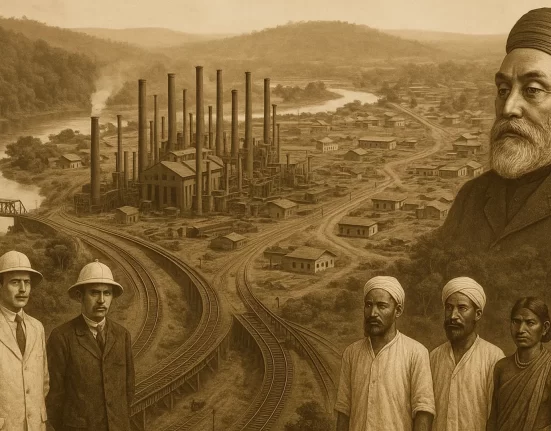
- It is India’s first planned city, founded by Jamsetji Tata in the early 20th century.
- It houses major industries like Tata Steel, Tata Motors, and other large-scale manufacturing hubs.
- The city has better roads, infrastructure, and urban planning compared to most Tier-2 cities.
However, despite these strengths, Jamshedpur was not selected as the state capital.
Why Ranchi Was Ultimately Chosen
There are several key reasons why Ranchi is the capital of Jharkhand instead:
1. Geographical Centrality
Ranchi is centrally located within the boundaries of Jharkhand, making it more accessible from all parts of the state, especially tribal regions in Gumla, Khunti, and Simdega.
2. Existing Government Infrastructure
As a former divisional headquarters in Bihar, Ranchi already had government buildings, courts, and a secretariat—making it easier and quicker to transition into a capital city.
3. Tribal Representation
Ranchi has a higher tribal population, representing the demographic that led the demand for statehood. It resonated with the cultural and emotional identity of the movement.
Tribal Sentiment and Political Symbolism
Jharkhand’s formation was fueled by decades of tribal activism, led by organizations like the Jharkhand Mukti Morcha (JMM). Ranchi and surrounding areas were hotbeds of this movement, and establishing the capital there honored the grassroots struggle of tribal communities.
Choosing Jamshedpur—a city with more outsiders and industrial elites—could have diluted the emotional symbolism that came with Jharkhand’s birth.
Legal and Administrative Practicality
Jamshedpur is not a municipal corporation governed by an elected civic body. Much of it is owned and administered by Tata Steel through JUSCO (Jamshedpur Utilities & Services Company). This means:
- No democratic local governance
- Limited government control over land and utilities
- Legal complications in allocating land for state-level institutions
In contrast, Ranchi offered a governance-friendly setup, making it more viable for building capital infrastructure.
The Long-Term Vision for Jharkhand
Post-formation, Ranchi was developed into a center for administration, education, and healthcare:
- Home to the Jharkhand High Court, Vidhan Sabha, and secretariat
- Hub for higher education: IIM Ranchi, BIT Mesra, and more
- Emerging IT parks and smart city proposals
While Jamshedpur remains the economic backbone of the state, Ranchi functions as the political and planning nerve center.
Final Thoughts
The decision on why Ranchi is the capital of Jharkhand goes far beyond the visible lens of roads, buildings, and urban infrastructure. It reflects a deeper narrative woven through decades of tribal assertion, political struggle, cultural identity, and administrative foresight. Ranchi was not just a geographic choice—it became a symbol of representation, echoing the voices that fought for autonomy, dignity, and development in a region long overlooked.
On the other hand, Jamshedpur, with its legacy of industrial excellence and global relevance, continues to be the economic engine of the state—producing steel, innovation, and employment. But its unique ownership model, lack of elected civic governance, and private administration limited its suitability as a democratic state capital.
As Jharkhand continues to evolve, the roles of Ranchi and Jamshedpur are no longer in competition, but in complementary alignment. Ranchi leads the state’s governance, policy, and education, while Jamshedpur drives its industry, innovation, and entrepreneurship. Together, they form the twin pillars of a growing Jharkhand—rooted in legacy, yet reaching for a future that is inclusive, progressive, and uniquely its own.