
The ongoing Jamshedpur flyover construction has become one of the city’s most talked-about infrastructure projects. Aimed at easing traffic congestion in the busy Mango-Payal Cinema corridor, the ₹252 crore project is now the center of public scrutiny, local objections, and policy-level revisions. While the flyover promises improved connectivity and long-term urban development, its current implementation has led to roadblocks—both literal and political.
This blog takes a comprehensive look at the flyover’s status, controversies, changes, and the broader implications for mobility and planning in Jamshedpur.
Table of Contents
- Project Overview: What’s Being Built
- Why the Jamshedpur Flyover Matters
- Local Opposition and Design Concerns
- Revised Plans After Public Feedback
- The Bigger Picture: JNNURM and Urban Renewal
- Looking Ahead: New Proposals and Timeline
- Final Thoughts
Project Overview: What’s Being Built
The new Jamshedpur flyover under construction near Mango is a major traffic decongestion initiative. It aims to:
- Ease vehicle flow from Mango to Sakchi
- Decrease bottlenecks near Payal Cinema Road
- Provide smoother connectivity to the Subernarekha Link Road
Funded under a ₹252 crore budget, the project is targeted for completion by December 2025. It’s expected to significantly impact daily commutes and long-term city planning.
Why the Jamshedpur Flyover Matters
For decades, Mango and Sakchi have remained high-traffic areas, especially during peak hours and festival seasons. The flyover is envisioned to:
- Improve traffic circulation near dense market zones
- Enhance transport access for commercial vehicles
- Reduce travel time for thousands of daily commuters
Urban development advocates see this as part of Jamshedpur’s gradual shift toward a smarter, more connected cityscape.
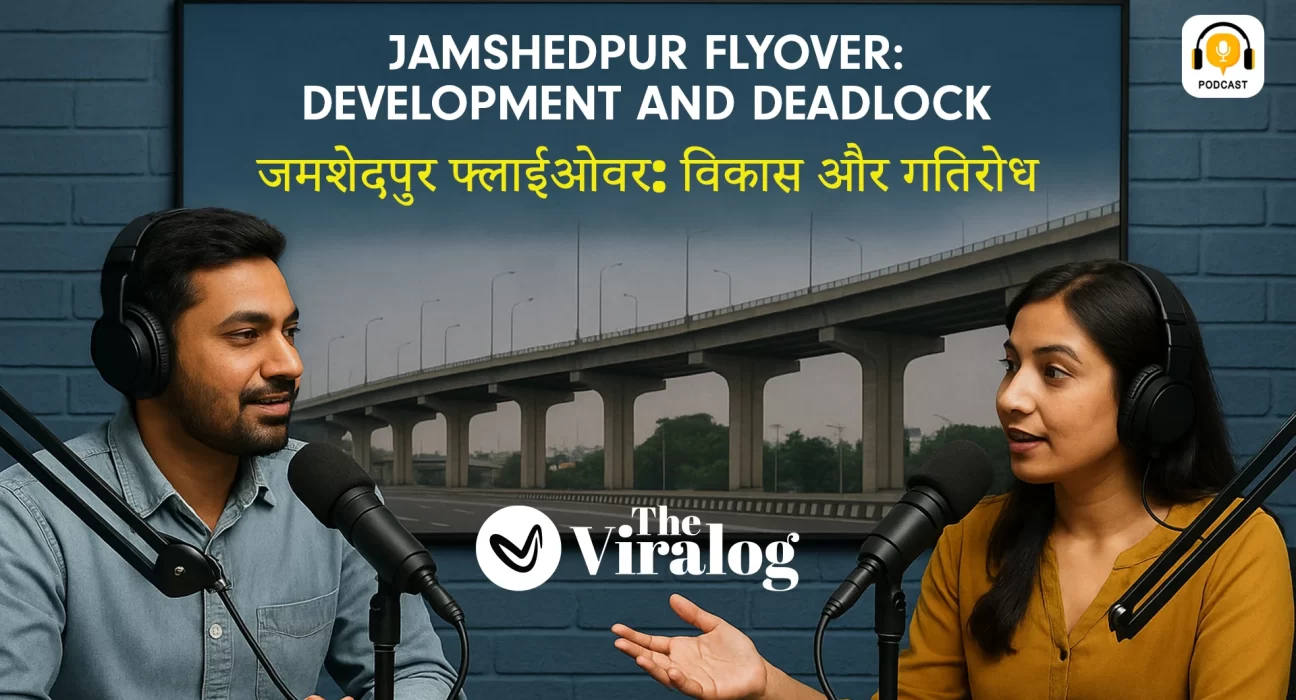
🎧 Hear the Story – The Viralog Podcast

Jamshedpur Flyover Development and Deadlock | जमशेदपुर फ्लाईओवर: विकास और गतिरोध
The Mango Flyover in Jamshedpur embodies both promise and pain—while it aims to transform connectivity, the current roadblocks and community concerns remind us that progress must be built on dialogue as much as concrete.
Local Opposition and Design Concerns
Despite government intentions, the Jamshedpur flyover has sparked concern.
Key issues raised include:
- One-way alignment near Payal Cinema, causing confusion
- Obstruction of shop entrances and reduced pedestrian space
- Fear that existing congestion will shift rather than reduce
Local vendors and residents, supported by Janata Dal (United), argue that the flyover’s layout may worsen traffic and hurt businesses instead of resolving problems.
Revised Plans After Public Feedback
In response, MLA Saryu Roy held meetings with engineers and local stakeholders. This led to:
- A design revision making the Payal Cinema stretch two-way
- Promises to include pedestrian lanes and better signal planning
- Consideration of new traffic simulations before finalizing sections
This participatory planning process is a rare and welcome development in regional infrastructure projects.
The Bigger Picture: JNNURM and Urban Renewal
The flyover’s funding and planning are tied to the Jawaharlal Nehru National Urban Renewal Mission (JNNURM), which supports:
- Urban transport and road network upgrades
- Sewerage and water supply systems
- Encouragement of public-private partnerships (PPP)
Jamshedpur, being a Tier-2 city, is now seeing long-overdue infrastructure benefits through such centrally sponsored schemes.
Looking Ahead: New Proposals and Timeline
Beyond the current flyover, a new proposal has emerged for an overpass from Hathi Ghoda Temple to Bhuinyadih cremation ground. This indicates:
- A shift in planning focus toward underserved localities
- A vision for long-term city-wide traffic management
- A gradual transformation of Jamshedpur’s transit infrastructure
With the main Mango flyover expected to finish by late 2025, residents remain cautiously optimistic about smoother roads and fewer gridlocks.
Final Thoughts
The Jamshedpur flyover project reflects both the possibilities and challenges of urban transformation in mid-sized Indian cities. While its goals are ambitious, its execution must continue to be transparent, inclusive, and adaptable. The lessons from community pushback and redesign efforts could serve as a model for future infrastructure projects in Jharkhand and beyond.
As Jamshedpur balances its rich industrial legacy with the demands of rapid urban growth and modern infrastructure needs, transformative projects like this flyover could play a pivotal role in shaping the city’s next chapter—enhancing mobility, revitalizing public spaces, and signaling a shift toward smarter, more inclusive urban development.