
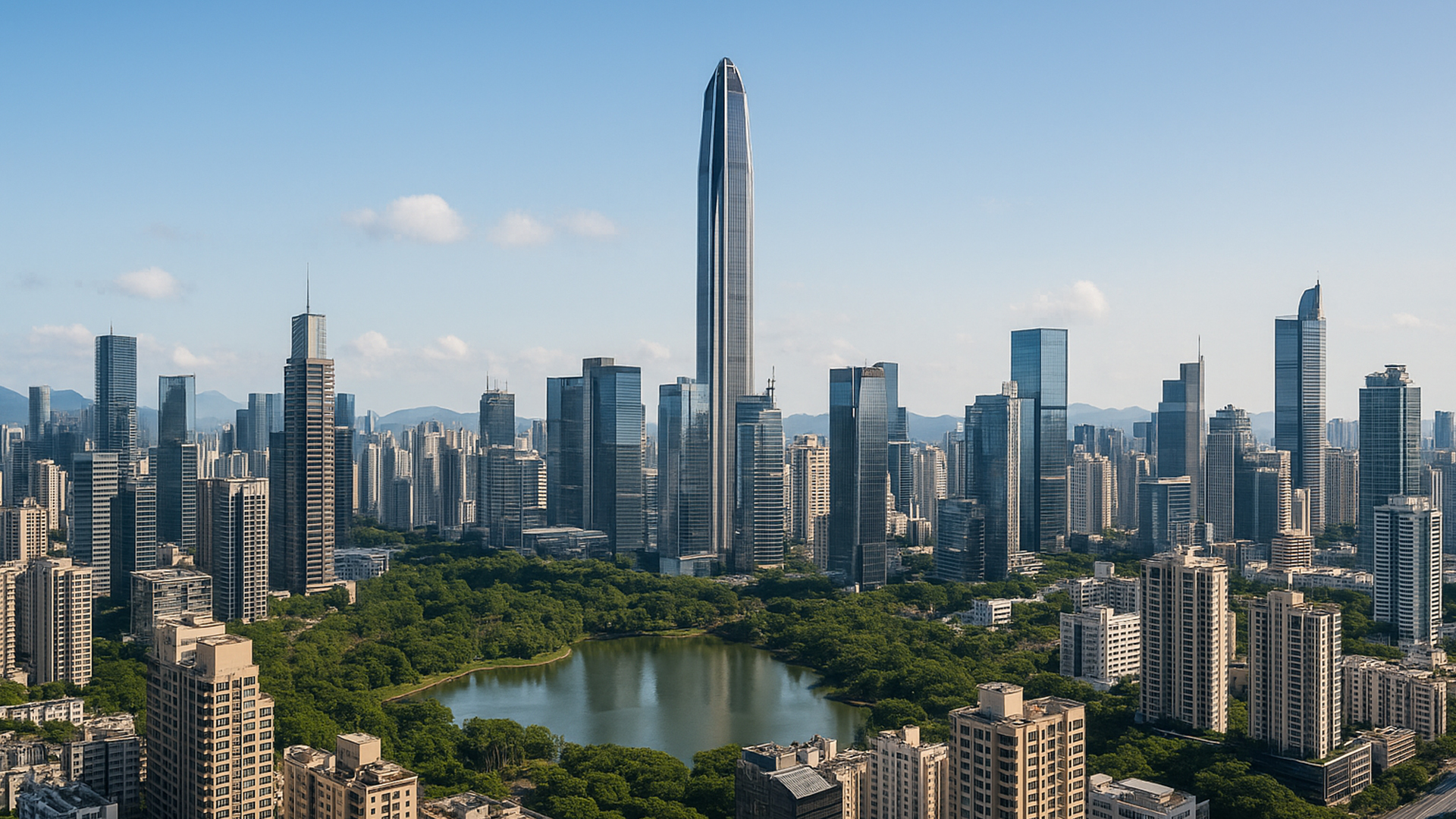
Shenzhen (深圳) is a dynamic and futuristic city in southeastern China, directly bordering Hong Kong. Known as one of the fastest-growing cities in the world, Shenzhen has evolved from a humble fishing village into a global center for technology and innovation. This transformation began in 1980, when it was designated as China’s first Special Economic Zone (SEZ). Since then, Shenzhen has become a model city for urban development, entrepreneurship, and innovation. Today, it stands tall as a symbol of modern China, home to tech giants like Huawei, Tencent, and DJI.
People are drawn to Shenzhen for numerous reasons. Entrepreneurs see it as a launchpad for tech innovation. Tourists come to explore its cultural diversity, architectural marvels, and lush green parks. Expats find it an exciting place to live due to its high standard of living, international schools, and connectivity. Shenzhen blends tradition and modernity in a unique way—it’s a place where ancient Chinese customs meet Silicon Valley-style innovation. The city offers a rare mix of opportunities for work, leisure, and exploration, making it a top destination for those looking to experience China beyond Beijing and Shanghai.
The quality of life in Shenzhen is also a huge attraction. Its clean environment, efficient public transport, and abundance of public parks make it ideal for families, professionals, and students. The city’s youthful energy, driven by its large migrant population and startup culture, ensures that it stays ahead of the curve. Simply put, Shenzhen is a place where dreams take flight, and the future is being built today.
Table of Contents
Top Questions
Why is Shenzhen so famous?
Shenzhen is famous for its rapid transformation from a small fishing village into a global technology and innovation hub. It was China’s first Special Economic Zone, attracting massive investment and talent. The city is home to major tech giants like Huawei and Tencent, making it a leader in electronics, telecommunications, and startups. Its modern skyline, thriving economy, and role as a bridge between mainland China and Hong Kong add to its fame.
Is English spoken in Shenzhen?
English is not widely spoken by the general population in Shenzhen, as Mandarin and Cantonese are the primary languages. However, in business districts, international schools, major hotels, and tech companies, you will find many English speakers. Signage in the metro and public areas often includes English, making it relatively easy for tourists and expats to get around.
Can I speak Mandarin in Shenzhen?
Yes, Mandarin is the official language of Shenzhen and is widely spoken throughout the city. Although many locals also speak Cantonese, especially older generations and in some districts, Mandarin is the language used in schools, government, business, and media, making it the best choice for communication.
Can tourists visit Shenzhen from Hong Kong?
Yes, tourists can visit Shenzhen from Hong Kong. There are several border crossings, such as the Luohu Port, Futian Port, and Huanggang Port, which connect the two cities. Visitors need to have the appropriate visa or travel permit to enter Shenzhen from Hong Kong, and many travelers do day trips or longer stays because of the close proximity.
Is Shenzhen in China or Hong Kong?
Shenzhen is a city in mainland China, located directly north of the Hong Kong Special Administrative Region of China. While it borders Hong Kong, Shenzhen is governed by the Chinese mainland government and operates under mainland laws and policies, separate from Hong Kong’s system.
Is Shenzhen the richest city in China?
Shenzhen is one of the richest and fastest-growing cities in China, especially known for its high GDP per capita and booming tech industry. While cities like Shanghai and Beijing also have massive wealth and influence, Shenzhen’s rapid economic rise and innovation-driven economy place it among the top-tier wealthy cities in China.
Quick Facts
| Country | China (中国) Pinyin: Zhōngguó |
| State/Province | Guangdong Province (广东) Pinyin: Guǎngdōng |
| Division/Zone | Pearl River Delta Economic Zone |
| District | 9 Districts: Luohu, Futian, Nanshan, Yantian, Bao’an, Longgang, Longhua, Pingshan, Guangming |
| Established | 1979 (City); 1980 (Special Economic Zone) |
| Named After | “Shenzhen” means “deep drains” – referring to local irrigation channels |
| Government Type | Sub-provincial city under central government |
| Government Body | Shenzhen Municipal People’s Government |
| Administrator | Mayor of Shenzhen [Qin Weizhong (覃伟中) since: May 19, 2021] |
| Area | 2,050 sq km (792 sq mi) |
| Elevation | 6 meters (20 feet) above sea level |
| Population (2024) | 17.99 million |
| Males | Around 9.66 million, 55.04% |
| Females | Around 7.89 million, 44.96% |
| Sex Ratio | 122.43 males per 100 females |
| Literacy Rate | Over 96% |
| GDP | ¥3.46 trillion CNY (Approx. $475 billion USD in 2023) |
| Time Zone | China Standard Time (UTC+8) |
| PIN Code | 518000 – 518172 |
| Telephone Code | +86 755 |
| Vehicle Registration | 粤B (Yue B) |
| Public Transport | Metro, electric buses, high-speed rail, ferries, taxis, bike-sharing |
| Official Language | Mandarin Chinese (Putonghua) |
| Spoken Language | Mandarin, Cantonese, Hakka, English (especially in business districts) |
| Official Website | www.sz.gov.cn |

 21°C
21°C Best Things to Do in Shenzhen
Shenzhen offers a wide array of attractions that cater to tourists, locals, and international travelers. One of its most famous landmarks is the Window of the World, a theme park featuring miniature versions of over 130 world-famous monuments such as the Eiffel Tower, Taj Mahal, and the Egyptian pyramids. It’s a fun and educational place to experience global culture in one spot. Another must-visit is the Splendid China Folk Village, which combines historic sites and cultural performances to offer a walk through China’s rich heritage.
Modern architecture lovers should not miss the Ping An Finance Centre, which stands at 599 meters, making it one of the tallest skyscrapers globally. From the observation deck, you get a panoramic view of Shenzhen and even parts of Hong Kong. For a more artistic experience, head to OCT Loft Creative Culture Park, a revitalized industrial zone now brimming with art galleries, coffee shops, and fashion boutiques.
Family travelers will enjoy Happy Valley Shenzhen, an amusement park filled with thrilling rides, water slides, and live entertainment shows. Shenzhen Safari Park is another family favorite, known for its free-roaming animals and educational exhibits. Meanwhile, shopaholics will find paradise at Huaqiangbei Commercial Street, considered one of the world’s largest electronics markets. For luxury shopping, head to COCO Park or MixC Mall, which also offer dining and nightlife options.
Cultural enthusiasts can explore Shenzhen Museum for insights into the city’s rapid development and ancient roots. Don’t miss Dafen Oil Painting Village, where you can see artists recreate masterpieces and purchase unique artworks. Each district of Shenzhen offers something special, making exploration a never-ending adventure.
Food & Dining
Shenzhen’s food scene is a celebration of China’s vast culinary diversity and global influence. As a migrant city, it has absorbed flavors from every province, resulting in a culinary landscape that is as diverse as it is delicious. From street food stalls to five-star restaurants, the options are endless. One cannot talk about Shenzhen without mentioning Cantonese cuisine, which is prominent in the region. Signature dishes like dim sum, char siu pork, and double-boiled soups are staples at traditional teahouses across the city.
For spicy lovers, there are plenty of Sichuan and Hunan-style eateries serving fiery hotpots and stir-fried delicacies. In Dongmen Old Street, the city’s oldest shopping area, you can try authentic snacks like grilled squid, oyster omelets, mango desserts, and rice noodles. It’s a hotspot for budget-friendly eats that never compromise on flavor. On the upscale side, Sea World Plaza in Shekou offers everything from Italian bistros to Japanese sushi bars, with many venues providing harbor views.
Shenzhen is also a city that embraces innovation in food. Fusion cuisine is popular, especially in trendy areas like Nanshan and Futian. Here, you can find creative takes on Chinese dishes mixed with Western influences. Vegetarians and vegans will find many options in Shenzhen, with dedicated plant-based restaurants and international chains readily available.
Food festivals are another reason to explore the city. Events like the OCT Harbour International Food Carnival and Shenzhen Food Festival bring together chefs and food lovers to celebrate gastronomy. Whether you’re in the mood for traditional Chinese fare, international flavors, or experimental cuisine, Shenzhen will never leave your palate bored.
Events and Festivals
Despite being a relatively young city, Shenzhen hosts a wide range of annual events and festivals that showcase its vibrant spirit and multicultural environment. These events provide a platform for locals and tourists to connect through technology, art, music, and tradition. One of the biggest highlights of the year is the China Hi-Tech Fair, held every November. It’s Asia’s largest and most influential tech expo, featuring groundbreaking innovations, global networking opportunities, and product launches that often shape the future of technology.
Shenzhen also embraces culture through the International Culture Industries Fair, where artists, publishers, and creators from around the globe exhibit their work. Visitors can enjoy performances, exhibitions, and workshops that highlight Shenzhen’s creative pulse. In addition, the city celebrates traditional Chinese festivals like Spring Festival (Chinese New Year), Mid-Autumn Festival, and Dragon Boat Festival with public performances, fireworks, and special events across districts.
Music and performing arts have a solid platform in Shenzhen through events like the Shenzhen Fringe Festival and Strawberry Music Festival. These feature a mix of local indie bands, international acts, and street performers. There’s also the OCT-LOFT Jazz Festival, which brings global jazz talents to the city each autumn.
Sporting events also have their place, including the Shenzhen International Marathon, Shenzhen Tennis Open, and Shenzhen Golf Open. These attract athletes and spectators from around the world. With its robust calendar of events, Shenzhen ensures there’s always something exciting happening, whether you’re into gadgets, art, traditions, or sports.
Outdoor Activities and Nature
While Shenzhen is a high-tech metropolis, it doesn’t lack in natural beauty and outdoor activities. The city’s planning integrates green spaces and natural landscapes, offering residents and tourists a healthy balance between urban life and nature. One of the most popular destinations for outdoor lovers is Wutong Mountain, the highest peak in Shenzhen. Hikers enjoy its well-maintained trails, waterfalls, and breathtaking views of the city and coastline. It’s a popular spot during weekends and holidays.
For beach enthusiasts, Dameisha and Xiaomeisha are the go-to destinations. Located in the Yantian district, these beaches are perfect for swimming, picnicking, and beach volleyball. Their scenic coastal roads are also great for cycling. Xichong Beach, located further out, offers a more tranquil and untouched coastal experience.
If you’re more into relaxed nature walks, Fairy Lake Botanical Garden offers expansive gardens, serene temples, and peaceful hiking routes. It’s also home to the famous Hongfa Temple, a spiritual destination nestled within the mountains. Another gem is the Mangrove Nature Reserve, especially popular among bird watchers and photographers. This protected area, along the Futian waterfront, is a rare urban ecosystem that plays host to migratory birds and local flora.
Families often spend their weekends at Lianhua Mountain Park, which is centrally located and features lotus ponds, recreational areas, and a large statue of Deng Xiaoping. Shenzhen Bay Park provides kilometers of seaside walking paths and cycling lanes, connecting multiple districts and offering panoramic views of Hong Kong.
Outdoor fitness is also encouraged in Shenzhen, with public exercise zones, basketball courts, and yoga lawns scattered throughout neighborhoods. Whether you’re an adventure seeker or someone who simply enjoys fresh air, Shenzhen makes outdoor living not only possible but a daily delight.
Geography and Location
Shenzhen is located in southeastern China, nestled along the southern coast of Guangdong Province, directly facing the South China Sea. It shares its southern border with the Hong Kong Special Administrative Region, making it one of the most strategically positioned cities in China. This geographic advantage has played a pivotal role in shaping Shenzhen’s rapid economic and urban development. Covering an area of approximately 1,992 square kilometers, Shenzhen forms part of the Pearl River Delta Economic Zone, one of the most economically vibrant and densely populated regions in the country.
The city is surrounded by Dongguan to the north and Huizhou to the northeast, while Hong Kong lies to the south across the Shenzhen River. It is divided into several administrative districts, including Futian, Luohu, Nanshan, Yantian, Bao’an, Longgang, and newer districts like Pingshan, Guangming, and Longhua. Each of these districts has unique characteristics, from central business hubs to cultural villages and natural reserves.
Shenzhen’s coastal location has enabled it to become a major port city, with Yantian Port and Shekou Port serving as key shipping and logistics centers. The city’s proximity to Hong Kong International Airport, Shenzhen Bao’an International Airport, and several express highways and high-speed rail links makes it highly accessible both domestically and internationally. This ease of access has been crucial in attracting international talent, investment, and businesses to the city.
Geographically, Shenzhen enjoys a mix of urban and natural landscapes, with mountains, lakes, and beaches enriching its environment. This blend of topography contributes not only to the city’s aesthetics but also to its appeal as a livable, environmentally conscious metropolis. Shenzhen’s geography has truly been a cornerstone in its journey from fishing village to global city.
Climate and Environmental Context
Shenzhen experiences a subtropical monsoon climate, characterized by hot, humid summers and mild, dry winters. This makes the city a comfortable year-round destination for both tourists and residents. The average annual temperature is about 23°C (73°F), with summer highs reaching up to 34°C (93°F) and winter lows rarely dropping below 10°C (50°F). Rainfall is abundant, particularly from May to September, with the typhoon season peaking in July and August. Despite occasional storms, Shenzhen remains largely resilient thanks to advanced infrastructure and disaster preparedness systems.
The city places a strong emphasis on environmental sustainability. Over the past decade, it has transformed into one of China’s greenest cities. Shenzhen was the first city in the world to fully electrify its public bus fleet, and its electric taxi fleet is also one of the largest globally. These initiatives have significantly reduced air pollution and made public transportation more eco-friendly.
Shenzhen’s commitment to green urban planning is evident in its widespread urban forests, parks, and green belts. The government promotes vertical gardening and eco-roofs, and many new buildings are constructed to meet LEED and other green building standards. Shenzhen Bay Park, Lianhua Mountain, and Fairy Lake Botanical Garden are prime examples of how nature is seamlessly woven into city life.
Air quality in Shenzhen is relatively high for a megacity, thanks to stringent environmental regulations and public awareness campaigns. Additionally, water bodies such as Shenzhen Reservoir and Songgang River are under continuous restoration to improve water quality. Environmental education is also a key focus, with schools and community centers regularly hosting sustainability workshops and campaigns.
In essence, Shenzhen is not only a city of innovation but also a model for eco-conscious urban living, proving that rapid development and environmental stewardship can go hand in hand.
History and Culture
The story of Shenzhen is one of extraordinary transformation, blending deep-rooted traditions with bold strides into the future. While today it is known for innovation and skyscrapers, Shenzhen’s history is humbler and older than many realize. Just a few decades ago, this vibrant metropolis was a quiet fishing village with a population of barely 30,000. But its fate changed forever in 1980, when China’s government chose Shenzhen as the site of the country’s first Special Economic Zone (SEZ) — a bold experiment to open China to the world and test free-market reforms.
That single decision sparked one of the most remarkable urban transformations in modern history. From a rural town, Shenzhen grew into a megacity of over 17 million people, fueled by innovation, investment, and a forward-looking vision. As industries and skyscrapers rose, so did a cultural identity unique to Shenzhen — one not bound by centuries of tradition, but formed by immigration, entrepreneurship, and creativity. It became a city of dreamers, where people from across China and beyond came to build new lives and futures.
Yet Shenzhen has also worked hard to preserve and celebrate its heritage. In places like Dapeng Fortress, you’ll find stone walls and battlements from the Ming Dynasty, standing as reminders of the city’s strategic past. The Hakka culture, brought by early settlers, continues to thrive through its architecture, folk music, and cuisine. The city’s historic villages like OCT-Loft and Guanlan Print Village have been transformed into cultural hubs blending art, design, and heritage preservation.
In terms of arts and culture, Shenzhen punches well above its weight. It is a UNESCO Creative City of Design, home to prestigious events like the Shenzhen Design Week and Shenzhen International Cultural Industries Fair. The city embraces contemporary art through institutions like the OCAT (OCT Contemporary Art Terminal) and the Shenzhen Museum of Contemporary Art and Urban Planning. Public sculptures, murals, and installations dot the urban landscape, showcasing a strong commitment to making art accessible to everyone.
Music, too, thrives here. From symphony orchestras to indie rock bands, Shenzhen’s music scene is a reflection of its diversity and youthful spirit. The city hosts various cultural festivals, celebrating both Chinese traditions and global influences. Chinese New Year, the Dragon Boat Festival, and the Mid-Autumn Festival are celebrated with grandeur, while international events like Shenzhen Fringe Festival offer platforms for experimental art, theater, and performance.
The culture of Shenzhen is not inherited — it is constantly created. It’s a city that honors its past while inventing its future. In every alley, gallery, or startup office, you feel the pulse of a place where tradition meets innovation, and where history is written daily by its people.
Sports
Shenzhen is not only known for its tech prowess and urban innovation but also for its growing sports culture that has taken root over the past few decades. The city boasts a robust sports infrastructure, supporting both professional-level competitions and community-level engagement. With a youthful and energetic population, Shenzhen has invested in a variety of sports facilities to foster physical fitness, team spirit, and a healthy lifestyle.
At the professional level, Shenzhen FC, the city’s primary football team, competes in the Chinese Super League (CSL). The team plays home matches at the Shenzhen Universiade Sports Centre, a massive stadium complex that can host tens of thousands of spectators. The city has also hosted several international sporting events, including the 2011 Summer Universiade, which brought global attention to Shenzhen’s sports capacity and infrastructure readiness. The Universiade helped catalyze the development of new stadiums, swimming complexes, and training facilities across the city.
The most popular sports in Shenzhen include football, basketball, badminton, and table tennis. Moreover, as the city embraces a modern, outdoor lifestyle, marathons, cycling events, and fitness boot camps are becoming increasingly common in its scenic urban parks and greenways. Areas like Shenzhen Bay Park, Lianhuashan Park, and Xiangmi Lake are favorites for early morning joggers and yoga groups. The city is also home to numerous public sports complexes where residents can engage in indoor activities like rock climbing, squash, and martial arts.
In addition to mainstream sports, Shenzhen has embraced adventure sports and e-sports. With an energetic tech-savvy youth population, e-sports arenas and gaming cafes are thriving. The city has even hosted national e-sports tournaments, reflecting its blend of digital culture and entertainment. Moreover, with its coastal location and access to rivers and lakes, Shenzhen offers water sports like kayaking, stand-up paddleboarding, and even sailing.
Some of China’s rising athletes and sports personalities hail from or train in Shenzhen, thanks to its elite training academies and state-of-the-art coaching systems. As China prepares to lead in global sports, Shenzhen’s role as a training ground and host city is growing rapidly, securing its place as a hub of sporting excellence and athletic development.
Shopping and Entertainment
In Shenzhen, shopping is more than just an activity—it’s a cultural experience. The city has earned its reputation as a shopper’s paradise, offering everything from glitzy high-end malls to bustling street markets, tech bazaars, and independent design boutiques. Whether you’re hunting for luxury brands or quirky local finds, Shenzhen delivers a retail landscape as dynamic and diverse as the city itself.
One of the most iconic shopping destinations in Shenzhen is the Luohu Commercial City, located near the Hong Kong border. It’s a multi-level mall where bargaining is the norm, and you can find tailored suits, accessories, electronics, souvenirs, and more. Just a few minutes away, Dongmen Pedestrian Street brings together the city’s vibrant street culture with rows of shops selling fashionable clothes, gadgets, and street food under neon lights.
For a more modern and luxurious experience, head to COCO Park or MixC Mall, where global fashion labels share space with fine dining restaurants, rooftop lounges, and even art galleries. These malls are not just retail spaces—they are lifestyle hubs where locals and travelers unwind. Shenzhen Bay MixC, one of the city’s newest and most upscale complexes, offers panoramic sea views and exclusive designer boutiques, making it a hotspot for elite shoppers and influencers alike.
But Shenzhen also champions creativity and the local arts scene. OCT-LOFT Creative Culture Park, a former factory complex, has been transformed into a maze of designer studios, cafes, art galleries, bookstores, and craft shops. It represents the city’s heart of independent culture and is a magnet for artists, musicians, and visitors seeking unique, homegrown creations. Similarly, UpperHills blends retail, fine art, and green space into one upscale destination with a strong focus on design and fashion innovation.
When it comes to entertainment, Shenzhen delivers at every scale. Families flock to Window of the World, a theme park showcasing miniature replicas of global landmarks, while Happy Valley offers roller coasters and fun for all ages. The Shenzhen Concert Hall, Grand Theatre, and Poly Theatre host orchestral performances, ballets, and international shows, highlighting the city’s appreciation for fine arts. For movie lovers, cinemas like Broadway Cinematheque offer indie and global films in intimate settings.
At night, Shenzhen’s nightlife scene lights up across districts like Futian, Shekou, and Nanshan. Rooftop bars, speakeasies, EDM clubs, and live jazz lounges cater to all tastes. Spots like Brass House, Pepper Club, and Vicha Bar are well known among locals and expats. And for those seeking more traditional experiences, tea houses and Chinese opera theaters offer a quieter but equally enriching evening.
What makes shopping and entertainment in Shenzhen so exciting is the seamless blend of global and local, modern and traditional. It’s a city where you can shop for the future, enjoy global trends, and still discover the rich character of Chinese culture, all in the same day. Whether you’re a fashion lover, a tech geek, an art enthusiast, or someone who just enjoys a good time, Shenzhen has it all—and then some.
Best Neighborhoods or Regions
Shenzhen is a sprawling metropolis made up of diverse districts, each with its own charm, pace, and personality. Whether you’re a digital nomad, expat, local resident, or a traveler planning an extended stay, understanding Shenzhen’s neighborhoods can help you find the perfect place to live, work, or explore. From futuristic skylines to cultural enclaves and coastal escapes, this city truly has something for everyone.
Futian District, often considered the heart of Shenzhen, is the city’s administrative and commercial center. Skyscrapers, five-star hotels, international schools, government offices, and shopping complexes like COCO Park define this urban core. It’s an ideal neighborhood for professionals and business travelers, thanks to its modern infrastructure and close proximity to transportation hubs, including the Shenzhen Civic Center and Futian Railway Station, which connects directly to Hong Kong via high-speed train.
Just west of Futian lies Nanshan District, the tech powerhouse of the city. Home to industry giants like Tencent, DJI, and ZTE, Nanshan has a younger, tech-savvy population. It offers a blend of international schools, green parks, and cultural centers like the Shenzhen Bay Park, Nantou Ancient City, and OCT-LOFT Creative Culture Park. If you’re looking for a modern lifestyle with creative and entrepreneurial energy, Nanshan is the go-to district.
For coastal living and international vibes, Shekou—a sub-area within Nanshan—is a top choice among expats. With a scenic harbor, international restaurants, cozy cafes, and a large foreign community, Shekou feels like a global village. Its Sea World Plaza is a popular spot for nightlife and dining, while its ferry terminal provides easy access to Hong Kong, Macau, and Zhuhai.
On the eastern side of Shenzhen, Luohu District represents the city’s historical core. As one of the first areas developed after the economic reforms of the 1980s, Luohu is rich in shopping culture and border trade. It’s best known for Luohu Commercial City, Dongmen Market, and Shenzhen Railway Station, making it a hub for bargain hunters and cross-border commuters. Though slightly older in style, Luohu’s affordability and central location still make it appealing.
Longgang District, to the northeast, is rapidly developing with new housing complexes, business parks, and universities. It’s a popular destination for families and those looking for more affordable real estate without sacrificing too much connectivity. Dapeng Peninsula, located further southeast, belongs to this district and offers a completely different experience—lush mountains, pristine beaches, and traditional villages, perfect for nature lovers or those seeking a weekend getaway.
Other notable regions include Bao’an, an industrial and residential zone with a growing number of malls and tech parks, and Longhua, which is becoming an important node for housing, transport, and manufacturing. Pingshan and Guangming are up-and-coming districts with modern urban planning and are attracting attention for their long-term investment potential.
What’s remarkable about Shenzhen’s neighborhoods is the range of lifestyles they support—from luxury living in central Futian, to bohemian creativity in Nanshan, and coastal serenity in Shekou. Whether you’re looking for nightlife, affordability, business opportunities, or family-friendly amenities, there’s a corner of Shenzhen perfectly suited to your needs.
Economy
The economy of Shenzhen is one of the most powerful, innovative, and rapidly expanding in all of Asia. Often referred to as the “Silicon Valley of China,” this city has transformed itself from a modest fishing village in the 1970s into a global economic powerhouse with a Gross Domestic Product (GDP) exceeding 3.7 trillion RMB (approximately 520 billion USD) as of 2023. This remarkable growth positions Shenzhen among the top economic cities in China, alongside Beijing, Shanghai, and Guangzhou.
The economic rise of Shenzhen began in 1980 when it was selected as China’s first Special Economic Zone (SEZ). This bold experiment opened the doors to foreign investment, free-market policies, and export-oriented industries. As a result, Shenzhen became a magnet for entrepreneurs, international corporations, and startups alike. Today, the city continues to lead in high-tech industries, manufacturing, finance, biotech, telecommunications, and e-commerce.
A defining characteristic of Shenzhen’s economy is its concentration of major tech companies. Giants like Huawei, Tencent, DJI, and ZTE are headquartered here, creating an ecosystem that fosters innovation and technological advancement. Shenzhen Hi-Tech Industrial Park, also known as China’s Silicon Valley, hosts thousands of tech firms and startups, all contributing to the city’s digital economy.
Beyond tech, Shenzhen is also a key financial center. The Shenzhen Stock Exchange (SZSE) is one of the largest in Asia, supporting both traditional financial services and fintech innovations. In addition, the city’s close proximity to Hong Kong enhances its global connectivity and investment flow, making it a vital link in the Greater Bay Area (GBA) initiative—a mega-economic zone connecting 11 cities in southern China.
Manufacturing still plays a huge role in the city’s economy. Shenzhen is renowned for its advanced manufacturing and supply chain capabilities, particularly in electronics. It is the go-to location for hardware prototyping and production, which has earned it the nickname “the world’s factory for electronics.” Meanwhile, sectors like green energy, robotics, AI, and automated logistics are rapidly growing, supported by both private capital and government incentives.
In terms of employment, Shenzhen offers jobs across a broad spectrum of industries—from blue-collar manufacturing work to white-collar positions in tech, finance, and design. It’s estimated that the city’s working population exceeds 13 million, with an average annual salary that continues to rise year after year.
Despite its wealth, Shenzhen still faces challenges like income inequality, housing affordability, and regional disparities between older industrial areas and modern tech hubs. However, city planners are addressing these concerns through inclusive economic policies, smart city development, and infrastructure upgrades.
Looking ahead, Shenzhen’s economy is projected to grow steadily, thanks to government support for innovation, green development, and integration with global markets. It stands as a model for how forward-thinking urban planning, entrepreneurship, and policy experimentation can reshape a city—and even influence a nation’s future.
Education and Job Opportunities
Shenzhen is not just a powerhouse of economic growth—it is also a rising star in the fields of education and employment. Over the past two decades, the city has heavily invested in its educational infrastructure, attracting both domestic and international talent. As a result, Shenzhen has become a sought-after destination for students, educators, and professionals who are eager to be part of an innovative, forward-thinking environment.
In terms of school education, Shenzhen boasts hundreds of high-performing public and private schools, offering both the national curriculum and international programs. Prestigious institutions like Shenzhen Middle School, Shenzhen Foreign Languages School, and Shenzhen Experimental School are known for academic excellence and regularly send graduates to top universities worldwide. For expatriate families, the city is home to a range of international schools such as Shekou International School, QSI International School of Shenzhen, and Shenzhen College of International Education, offering globally recognized curricula like IB, A-Level, and AP.
At the higher education level, Shenzhen is building its reputation as a hub for world-class universities. Institutions such as Shenzhen University, Southern University of Science and Technology (SUSTech), and The Chinese University of Hong Kong, Shenzhen (CUHK-Shenzhen) are producing top-tier research and global partnerships. These universities focus on disciplines including engineering, biotechnology, computer science, AI, and finance—aligning with the city’s major industries.
The government supports this growth with initiatives like the Shenzhen Talent Program, which provides incentives, scholarships, and funding to attract elite researchers, educators, and graduates. These programs also emphasize vocational training, STEM education, and entrepreneurship, ensuring that Shenzhen remains competitive in emerging industries.
In the job market, Shenzhen offers one of the most diverse employment landscapes in China. From factory floor to corporate boardroom, opportunities abound. The technology sector is by far the largest employer, with companies like Huawei, Tencent, BYD, and DJI regularly hiring engineers, designers, programmers, marketers, and managers. Fintech, blockchain, e-commerce, green energy, and digital design are also booming, creating high-demand jobs across specialties.
The city’s status as a startup capital has led to a strong ecosystem for freelancers, independent professionals, and entrepreneurs. Shared workspaces, government incubators, and abundant venture capital make it easy for young professionals to launch innovative ventures.
Moreover, Shenzhen continues to attract foreign talent, thanks to its international working environment, open visa policies for tech and research sectors, and quality of life. English is increasingly used in workplaces, especially within multinational firms and universities, making it easier for non-Chinese speakers to find roles.
Despite the high cost of living in some districts, the average salaries in Shenzhen are among the highest in China, especially in the technology and financial sectors. As more young graduates, global professionals, and research experts move in, Shenzhen is transforming into one of the most dynamic cities for career growth and lifelong learning.
Infrastructure & Connectivity
Shenzhen’s infrastructure is a shining example of modern urban planning and rapid development, designed to support its booming population and fast-paced economy. The city’s layout carefully balances residential, commercial, and industrial zones while integrating green spaces and public amenities to promote a high quality of life.
One of the hallmarks of Shenzhen’s urban design is its extensive use of zoning principles. The city is divided into distinct areas such as the central business districts in Futian and Nanshan, large industrial parks in Bao’an and Longgang, and newly developed residential townships in Longhua and Pingshan. This zoning ensures efficient land use, reducing congestion and supporting specialized economic activities.
Shenzhen is also a pioneer in smart city technology. The government invests heavily in digital infrastructure such as high-speed internet connectivity, IoT-enabled public services, and intelligent traffic management systems. Many public buildings and communities feature green building standards and energy-efficient designs, reflecting Shenzhen’s commitment to sustainability.
The city’s water supply, sewage, and waste management systems are highly advanced, supporting millions of residents while minimizing environmental impact. New districts employ modern sewage treatment plants and waste-to-energy facilities to reduce pollution. Additionally, Shenzhen’s power grid is robust and increasingly based on renewable energy, including solar and wind.
A key component of Shenzhen’s infrastructure is its commitment to public transport connectivity, which seamlessly integrates into the wider Pearl River Delta region. The city’s rapid expansion has been accompanied by the development of a vast network of metro lines, bus routes, and bike-sharing systems, making commuting efficient and eco-friendly.
Industrial infrastructure in Shenzhen supports its role as a manufacturing and tech hub. The city hosts specialized zones like the Shenzhen High-Tech Industrial Park and the Qianhai Shenzhen-Hong Kong Modern Service Industry Cooperation Zone, which provide state-of-the-art facilities for research, manufacturing, and international trade. These zones offer incentives, cutting-edge labs, and innovation centers to attract global companies.
The government’s long-term urban development plans emphasize transit-oriented development (TOD), mixed-use communities, and the expansion of affordable housing to meet the needs of a diverse population. Shenzhen’s infrastructure strategy is constantly evolving, with projects underway to improve connectivity within the city and enhance its position as a gateway to the global economy.
In summary, Shenzhen’s infrastructure and connectivity are integral to its success, ensuring that the city remains livable, efficient, and competitive on the world stage.
Transportation and Accessibility
Shenzhen’s transportation network is a model of efficiency, connectivity, and modernity, making it easy for residents and visitors to navigate the sprawling city and beyond. The city’s planners have created an integrated system combining metro lines, buses, highways, and air travel, all designed to support its rapidly growing population and bustling economy.
At the core of Shenzhen’s public transportation is its extensive metro system, which as of 2025 includes over 13 lines and more than 400 kilometers of track. This network connects all major districts, from Futian and Nanshan to Bao’an and Longgang, enabling smooth, affordable, and environmentally friendly commuting. The metro stations are modern, clean, and well-signposted in both Chinese and English, accommodating the city’s large international community.
Complementing the metro is an extensive bus network with hundreds of routes that reach areas beyond metro coverage. Shenzhen has made great strides in making its bus fleet eco-friendly, operating one of the largest fully electric bus systems in the world. This move has significantly reduced urban pollution and improved air quality.
For road transport, Shenzhen is served by a comprehensive network of highways and expressways, including connections to neighboring cities like Dongguan, Huizhou, and Hong Kong. The Shenzhen Bay Bridge and Huanggang Port serve as vital cross-border links, facilitating seamless travel and trade between Shenzhen and Hong Kong. The city also encourages cycling, with dedicated bike lanes and widespread bike-sharing programs that promote healthy, green commuting options.
Air travel is facilitated by Shenzhen Bao’an International Airport, which ranks among China’s busiest airports. It offers numerous domestic and international flights, connecting Shenzhen to major cities in Asia, Europe, and North America. The airport is located about 32 kilometers from downtown and is accessible by metro and expressway, ensuring travelers can reach their destinations quickly.
For rail connections, Shenzhen is part of the national high-speed rail network, with stations like Futian Railway Station and Shenzhen North Station providing rapid links to Guangzhou, Beijing, Shanghai, and even Hong Kong via the Guangzhou-Shenzhen-Hong Kong Express Rail Link. These connections make Shenzhen an accessible hub within the Pearl River Delta and greater China.
Taxi services, ride-hailing apps, and car rentals provide additional flexibility for those who prefer private transport. The city also plans ongoing upgrades to transportation infrastructure, including new metro lines and highway expansions, to keep pace with urban growth.
In all, Shenzhen’s transportation and accessibility are integral to its success as a modern megacity—efficient, green, and globally connected.
Cost of Living and Accommodation
Living in Shenzhen offers a blend of modern convenience and vibrant urban life, but it comes with a cost that reflects its status as one of China’s most dynamic cities. The cost of living in Shenzhen is generally higher than many other Chinese cities, particularly when it comes to housing, but it remains more affordable than global megacities like Hong Kong or Shanghai.
Accommodation in Shenzhen ranges widely, from ultra-modern high-rise apartments in bustling districts like Futian and Nanshan, to more affordable older buildings in areas such as Longgang and Bao’an. Rent prices vary accordingly: a one-bedroom apartment in the city center typically costs between 4,500 to 7,000 RMB per month (about $650 to $1,000 USD), while similar units in suburban districts might be available for 2,500 to 4,000 RMB monthly. For families or groups, larger apartments and houses are available, but prices scale up significantly depending on location and amenities.
Utilities, including electricity, water, gas, and internet, add an average of 500 to 800 RMB per month to household expenses. Food and groceries are relatively affordable, especially if you shop at local markets or cook at home. Dining out varies from inexpensive street food costing just a few RMB to mid-range restaurants averaging 60 to 150 RMB per meal, and upscale dining options reaching several hundred RMB per person.
Transportation costs are quite reasonable due to Shenzhen’s excellent public transit system. A single metro ride usually costs between 2 to 7 RMB, depending on distance, while buses cost about 2 RMB. Taxi and ride-hailing fares are also affordable compared to many Western cities.
Salaries in Shenzhen tend to reflect its high cost of living. The average monthly wage is approximately 10,000 to 15,000 RMB (about $1,450 to $2,200 USD), with tech and finance professionals often earning significantly more. However, for newcomers or those working in service or manufacturing sectors, wages may be lower, necessitating careful budgeting.
Overall, while Shenzhen’s cost of living is on the higher side within China, many find that the city’s opportunities, infrastructure, and quality of life justify the expense. With a range of housing options and an efficient public transport network, newcomers can find accommodation and lifestyles to suit varied budgets and preferences.
Safety and Healthcare
Shenzhen is generally considered a safe city for residents and visitors alike, with relatively low crime rates compared to many other major urban centers worldwide. The local government places strong emphasis on maintaining public safety through a well-coordinated police force, extensive surveillance systems, and community policing initiatives. Violent crime is rare, and petty crimes like pickpocketing are mostly confined to crowded tourist areas and markets, so normal precautions are advised.
The city’s streets are well-lit, and public spaces are monitored, contributing to a sense of security both day and night. Expats and locals alike often praise Shenzhen for its safe neighborhoods, reliable public transportation, and family-friendly environments. The government also encourages community involvement in safety programs, promoting awareness and mutual support among residents.
When it comes to healthcare, Shenzhen boasts a modern and comprehensive system with numerous public and private hospitals, clinics, and specialty centers. Facilities such as the Shenzhen People’s Hospital, University of Hong Kong-Shenzhen Hospital, and Shenzhen Second People’s Hospital are equipped with advanced medical technology and staffed by well-trained professionals. Many hospitals offer services in English, catering to the city’s diverse international population.
The city’s healthcare system covers a wide range of medical needs, including general medicine, emergency care, maternity, dentistry, and specialized treatments like oncology and cardiology. Shenzhen is also a hub for biomedical research and innovation, supporting ongoing advancements in medical technology and pharmaceuticals.
Emergency services are efficient, with rapid response teams and well-maintained ambulance fleets. The government has also implemented public health campaigns focusing on disease prevention, vaccination, and health education to enhance community well-being.
Despite the strengths of Shenzhen’s healthcare infrastructure, some challenges remain, such as uneven access between urban and suburban areas and occasional language barriers in smaller clinics. However, telemedicine and international clinics are growing in number to bridge these gaps.
Overall, Shenzhen’s safety and healthcare systems provide a strong foundation for residents and visitors, contributing significantly to the city’s reputation as a livable, modern metropolis.
Government and Politics
Shenzhen operates under a municipal government structure aligned with the administrative framework of the People’s Republic of China. As a sub-provincial city within Guangdong Province, it is governed by a municipal party committee led by the Communist Party of China (CPC) and a people’s government headed by the Mayor. The city’s political leadership is responsible for setting development policies, economic planning, social services, and urban management.
Since becoming China’s first Special Economic Zone (SEZ) in 1980, Shenzhen has enjoyed greater autonomy compared to many other Chinese cities, especially in areas such as economic reform, foreign investment, and urban development. This unique status has empowered local government officials to experiment with innovative policies, positioning Shenzhen as a model for reform and opening-up in China.
The city’s government is organized into several administrative districts, each managed by its own district-level offices that oversee day-to-day governance, including public safety, education, and infrastructure. Shenzhen’s People’s Congress serves as the legislative body, comprised of representatives elected from various sectors, though political decisions are primarily influenced by the CPC.
In recent years, Shenzhen has focused on challenges related to rapid urbanization, such as housing affordability, traffic congestion, environmental protection, and social services. The local government regularly solicits public input and promotes transparency through digital platforms and community meetings, reflecting a trend toward more participatory governance.
Shenzhen also plays a vital role in broader regional politics, particularly as a key city within the Greater Bay Area (GBA) initiative, which aims to integrate the economies and infrastructure of Guangdong, Hong Kong, and Macau. This regional collaboration requires political coordination across different administrative jurisdictions and presents opportunities and challenges for Shenzhen’s governance.
Current civic issues include managing population growth sustainably, balancing industrial development with environmental protection, and addressing the needs of migrant workers and diverse communities. The government is actively investing in smart city technologies, green urban planning, and social welfare programs to meet these goals.
Overall, Shenzhen’s government is recognized for its proactive leadership, policy innovation, and ability to adapt rapidly to economic and social changes, making it a dynamic and forward-looking political environment.
Local Laws and Regulations
Living, working, or visiting Shenzhen means navigating a set of local laws and regulations designed to maintain order, promote safety, and encourage economic growth. While Shenzhen operates under the broader legal framework of China, it also enforces specific municipal rules that reflect its unique status as a Special Economic Zone (SEZ) and its cosmopolitan population.
One important aspect of Shenzhen’s legal landscape involves business and trade regulations. The city encourages foreign investment and entrepreneurship by offering streamlined procedures for company registration, tax incentives, and intellectual property protections. However, all businesses must adhere to strict compliance standards regarding labor laws, environmental protection, and consumer rights.
For residents and visitors, Shenzhen has clear regulations around housing and tenancy, including lease agreements, property rights, and eviction rules. Tenants are generally protected under local housing laws, but it is advisable to sign formal contracts and understand the terms thoroughly to avoid disputes.
Traffic laws are strictly enforced to ensure safety. Speed limits, helmet requirements for motorcyclists, and restrictions on drunk driving are rigorously applied. Shenzhen also has specific rules about parking, use of electric scooters, and pedestrian rights, contributing to its reputation for orderly urban mobility.
Alcohol consumption in Shenzhen follows China’s national laws, which means the legal drinking age is 18. Public drunkenness and disorderly conduct can lead to fines or detention. Smoking is banned in many public indoor spaces, including restaurants, offices, and public transport.
Shenzhen also enforces regulations on environmental protection. Businesses and citizens are encouraged to minimize waste, recycle, and conserve energy. Violations of pollution control can lead to heavy fines. The city has also implemented rules to regulate noise pollution, particularly in residential and commercial areas.
For foreigners, Shenzhen requires adherence to visa and residency regulations, including registration with local police upon arrival and compliance with work permit requirements. The government has recently introduced more flexible policies to attract international talent, but visa overstays or unauthorized work can lead to penalties.
Public behavior in Shenzhen is subject to general Chinese laws, including strict rules against public dissent, unauthorized protests, and spreading misinformation. However, everyday life is peaceful, and the city is known for being welcoming and respectful.
Understanding and respecting these local laws helps residents and visitors enjoy the benefits of Shenzhen’s vibrant, orderly, and safe environment.
Relocating to Shenzhen
Moving to Shenzhen offers exciting opportunities but also requires careful planning to ensure a smooth transition. As one of China’s fastest-growing and most international cities, Shenzhen attracts professionals, entrepreneurs, students, and families from all over the world. Whether you’re relocating for work, study, or lifestyle, understanding the practical steps and cultural nuances is essential.
Before moving, it’s important to secure the right visa and work permits. Shenzhen’s local government has streamlined procedures to attract global talent, offering various types of visas such as the Z visa for work, student visas, and business visas. Many companies assist their foreign employees with visa sponsorship, but individuals planning to move independently should consult the nearest Chinese consulate or the Shenzhen immigration office for the latest regulations.
Housing options in Shenzhen range from serviced apartments and condominiums in central districts like Futian and Nanshan, to more affordable rentals in suburban areas. Many expatriates prefer furnished apartments with amenities such as gyms, pools, and security. It’s advisable to visit the property in person or work with reputable real estate agents. Leasing contracts are usually one year, with a deposit of two to three months’ rent.
Upon arrival, foreign residents must register with the local police station within 24 hours—a legal requirement in China. This registration provides access to public services and is necessary for renewing visas or applying for residence permits. It’s also beneficial to open a local bank account, which will facilitate salary payments, rent, and daily expenses.
Healthcare access is good in Shenzhen, but many expats prefer private international clinics for English-speaking staff and convenience. It’s wise to arrange health insurance coverage before relocating, either through your employer or independently.
Language can be a barrier for newcomers, as Mandarin and Cantonese are the primary languages spoken. However, English is increasingly common in business and international schools. Taking language classes or using translation apps can ease daily life.
Transportation is user-friendly, with the extensive metro system connecting most neighborhoods. Many newcomers find cycling and ride-sharing apps convenient for shorter trips. Familiarizing yourself with local customs, traffic rules, and cultural etiquette is also recommended.
Shenzhen’s vibrant international community offers many networking groups, cultural activities, and support organizations for expatriates, which can help ease the adjustment period. Learning about local holidays, festivals, and social norms will enrich your experience.
In summary, relocating to Shenzhen requires preparation but offers rewarding opportunities in one of China’s most innovative and welcoming cities.
Summary
Shenzhen stands as a shining example of rapid transformation, innovation, and opportunity. From its humble beginnings as a small fishing village to becoming one of the world’s most influential Special Economic Zones, Shenzhen has carved out a unique identity that blends technology, culture, nature, and modern living. Its strategic location next to Hong Kong, combined with cutting-edge infrastructure, thriving economy, and vibrant community, makes Shenzhen a truly remarkable city.
Whether you are a traveler eager to explore its exciting attractions, a foodie looking to savor diverse culinary delights, or a professional seeking dynamic career opportunities, Shenzhen offers something for everyone. Its festivals and cultural events showcase a lively spirit, while its parks, beaches, and mountains provide a refreshing natural escape.
The city’s commitment to sustainability, safety, and education makes it not only an economic hub but also a great place to live and raise a family. Shenzhen’s diverse neighborhoods cater to different lifestyles and budgets, supported by excellent transportation and healthcare systems.
With a forward-looking government, favorable business environment, and growing international community, Shenzhen is poised to continue its ascent on the global stage. Whether as a tourist destination, business center, or new home, Shenzhen offers endless possibilities.
In short, Shenzhen should be on everyone’s radar—a city where tradition meets technology, ambition meets community, and dreams become reality.