

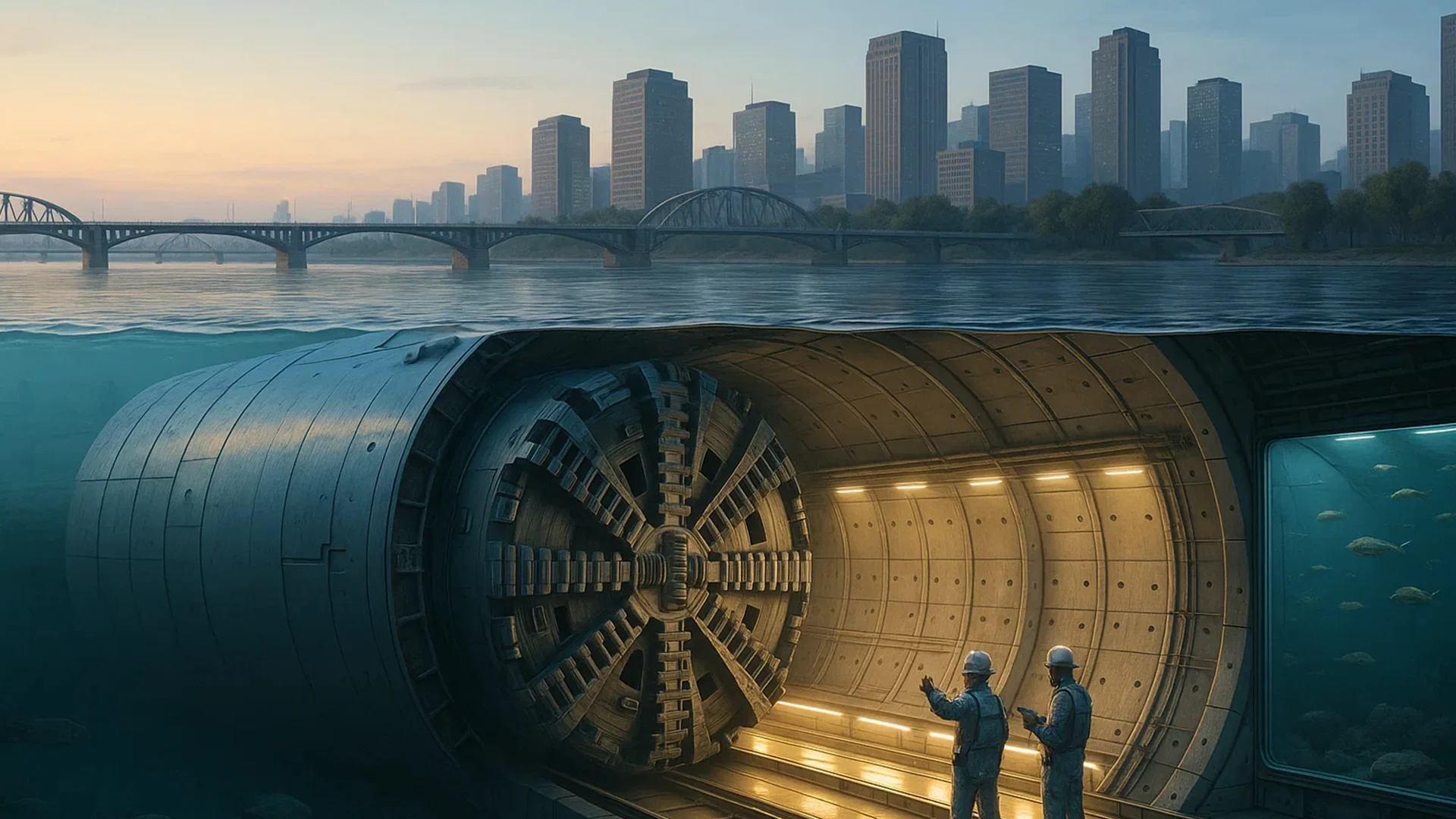
In a stunning display of speed and engineering mastery, China has once again rewritten the global infrastructure playbook by completing the world’s largest diameter underwater shield tunnel in a record-breaking 110 days. Built beneath the Yellow River in Jinan, Shandong Province, this 3.29-kilometer megastructure is not only a marvel of civil engineering but also a symbol of China’s growing dominance in next-generation construction technology.
This isn’t just a tunnel—it’s a testament to how far human ingenuity, machine intelligence, and planning precision can go when aligned under a national vision of progress.
The Vision Beneath the Surface
The idea for this massive tunnel was born from the need to ease congestion and expand transport access across the Yellow River. Shandong’s booming industrial growth and rising urbanization demanded a solution that could seamlessly link the north and south banks of Jinan.
But this was no ordinary tunnel. The goal was ambitious: build the largest diameter underwater shield tunnel in the world—fast, safe, and fully operational in just a few months.
While most experts would estimate 8–12 months for a tunnel of this size, China’s engineers pulled off the unimaginable: 110 days from start to finish.
Meet the Shanhe TBM: A Tunnel-Boring Titan
At the heart of this engineering breakthrough was the Shanhe Tunnel Boring Machine (TBM), a custom-built mechanical behemoth. With a jaw-dropping 17.5-meter cutting diameter, Shanhe is among the most advanced shield tunneling machines ever built.
It functioned like a mobile underground factory—boring through silt, rock, and water-soaked soil while simultaneously laying down reinforced tunnel segments. The TBM operated with a blend of:
- AI-powered navigation
- Real-time geological mapping
- Automated pressure balancing systems
- Remote monitoring and control
This allowed the team to maintain an average daily excavation speed of over 50 feet, all while avoiding collapses, leaks, or ecological disruption.
Overcoming the Yellow River: Risks and Resilience
Beneath the Yellow River, one of China’s longest and most historically significant waterways, lay immense challenges. The riverbed is known for its unpredictable sediment layers, unstable water tables, and high-pressure underground zones. A single miscalculation could cause catastrophic flooding or ground collapse.
Yet, the engineering team anticipated every obstacle. Innovations in slurry shield technology, segmental lining, and seismic-resistant structural design allowed them to progress without delays. Sensors inside the tunnel constantly tracked ground movement, water pressure, and the cutter’s position, enabling micro-adjustments in real-time.
Function and Future: More Than Just a Tunnel
Designed to handle six lanes of traffic, the tunnel will become a major artery for Jinan, drastically reducing travel time between the two riverbanks. But beyond transportation, it also supports economic growth, regional integration, and disaster resilience.
Built with:
- Anti-flood barriers
- Ventilation and lighting automation
- Emergency escape passages
- And 100-year durability in mind
This tunnel is part of China’s larger “new infrastructure” strategy, combining speed, sustainability, and smart technologies to meet 21st-century urban demands.
Why This Tunnel Matters Globally
Across the world, major cities and developing economies are exploring ways to build infrastructure faster and smarter. Projects like subsea metro lines in Southeast Asia or transcontinental rail tunnels in Europe are looking to China’s model of success.
The largest diameter underwater shield tunnel in Jinan is more than just a regional achievement—it’s a global benchmark. It proves that megastructures can be built:
- Faster than ever thought possible
- Bigger than engineering norms allowed
- Safer, smarter, and more sustainable
It sets the tone for how future mega-projects will be imagined and executed.
A Record That Redefines What’s Possible
From the first breakthrough beneath the Yellow River to the final structural inspection, the story of this tunnel is one of coordination, innovation, and relentless pursuit of excellence.
In just 110 days, China didn’t just build a tunnel—it broke records, shattered expectations, and charted a new future for global infrastructure.